Guide
How to Make a Budget (Step by Step)
A budget is a plan that assigns your monthly income to categories (fixed bills, variable spending, savings, and debt) so every dollar has a purpose and total planned outflows stay at or below total income.
What is a budget?
A budget is a written plan that matches your income to your expenses for a set period, usually one month. It tells every dollar where to go across bills, groceries, savings, and debt so you spend on purpose instead of by accident.
A budget is the foundation of personal money management. It works like a map: your income is the starting point, your expenses are the destinations, and the plan keeps you from running out of road before the month ends. A good budget covers four buckets: fixed bills (rent, insurance), variable spending (groceries, gas), savings (emergency fund, goals), and debt payments.
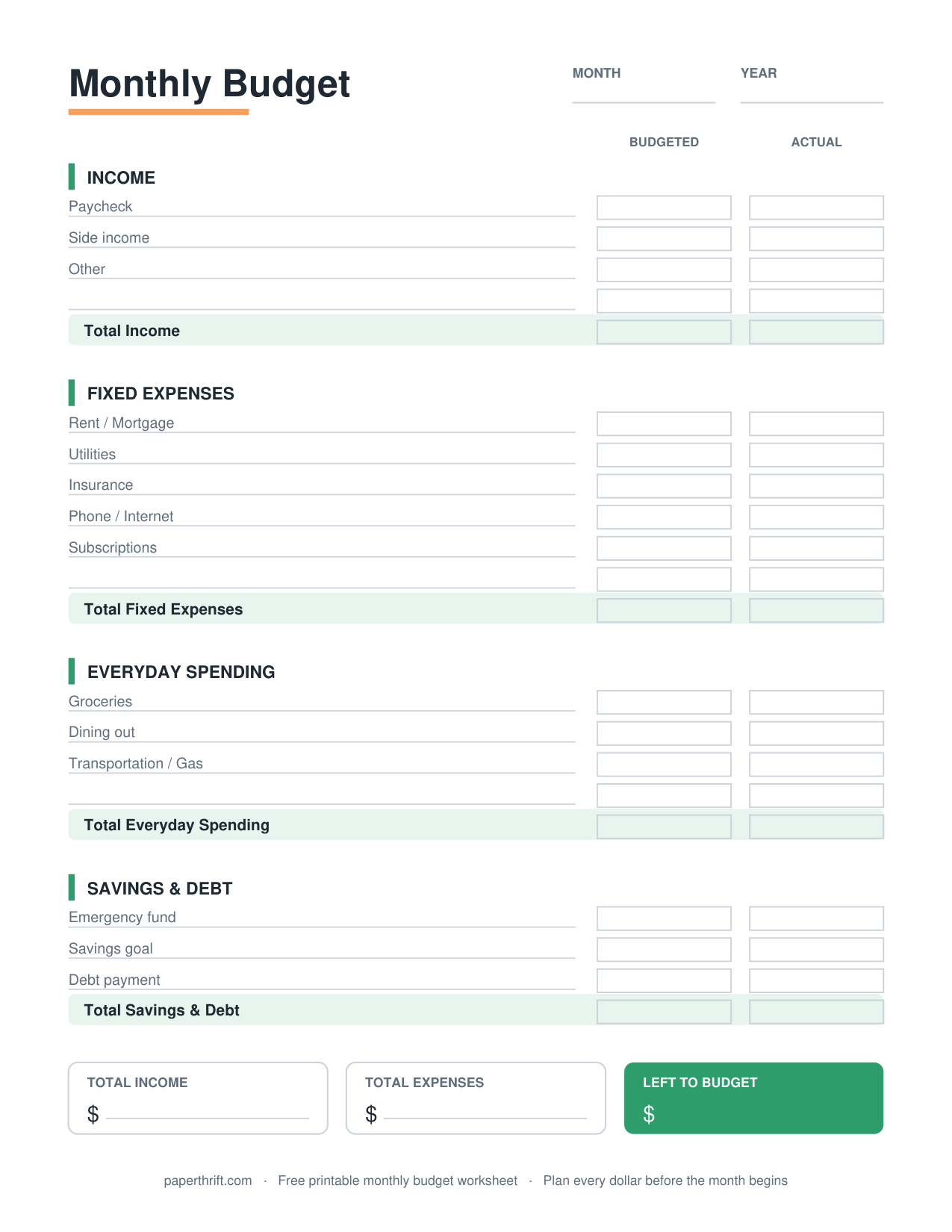
Budgets are not about restriction; they are about awareness. When you write down a $1,200 take-home paycheck and assign it before you spend it, you replace guessing with a plan. Most beginners start with a simple monthly budget worksheet to see all their numbers on one page. If you prefer a guided system, our library of budget templates and our walkthrough on how to start a budget binder shows how to keep your plan organized month after month.
How do you make a budget step by step?
Make a budget in five steps: add up your monthly take-home income, list every expense, subtract expenses from income, pick a budgeting method, then track your spending all month and adjust. Repeat the cycle each month to stay on plan.
Step 1: Calculate your monthly income. Use take-home pay (after taxes and deductions), not your gross salary. If you earn $1,500 every two weeks, your monthly income is about $3,250 because some months hold three paychecks. Step 2: List every expense: rent, utilities, groceries, subscriptions, minimum debt payments, and fun money. Step 3: Subtract total expenses from total income; the goal is a number at or above zero.
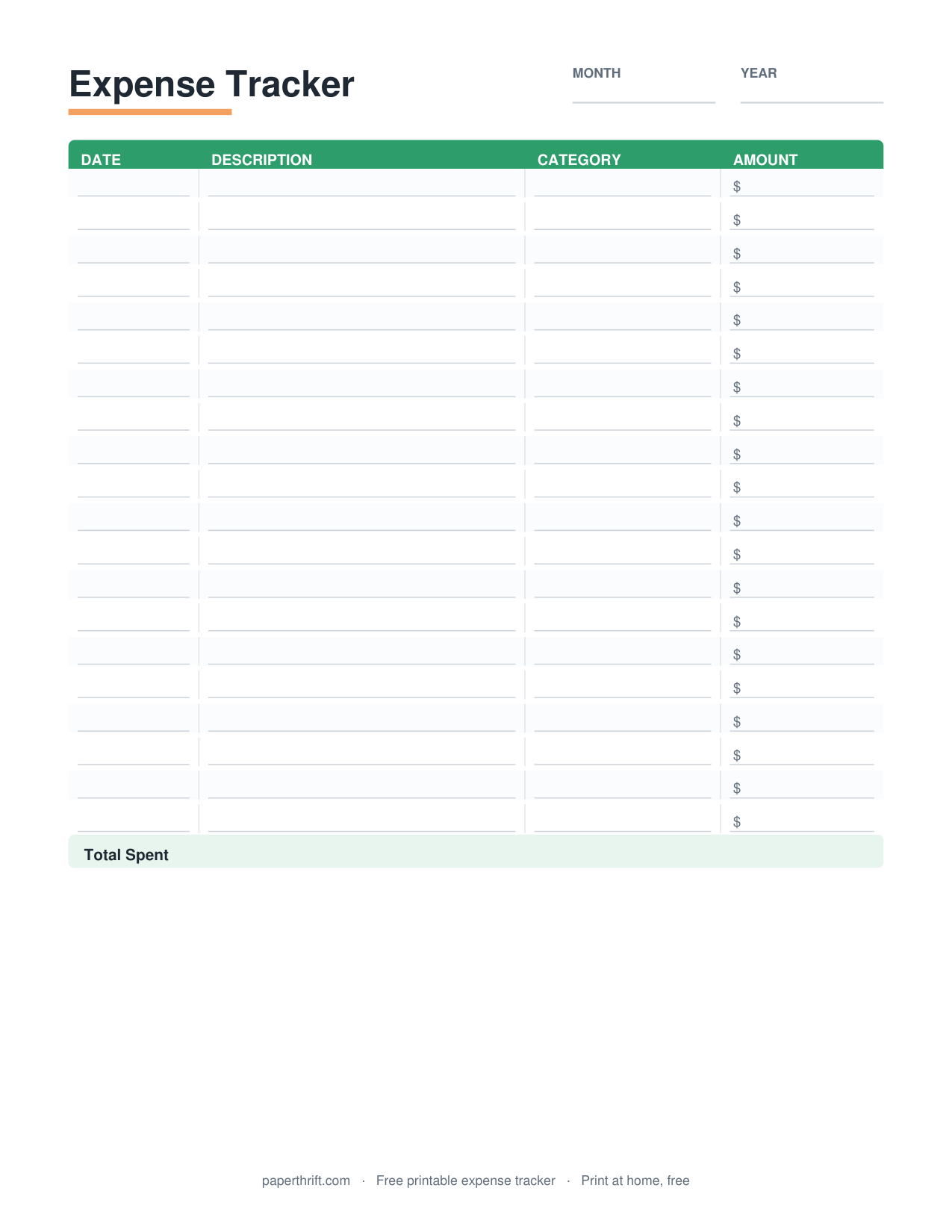
Step 4: Choose a method that fits how you think (covered in the next section). Step 5: Track spending as the month unfolds and adjust categories that run short. A printable expense tracker makes step five easy because you log purchases by hand, which slows impulse spending. If your pay arrives every two weeks, a biweekly paycheck budget lines your bills up to each deposit. Beginners who want the full method-by-method breakdown can read our guide on the 50/30/20 rule explained.
How much money should go to each category?
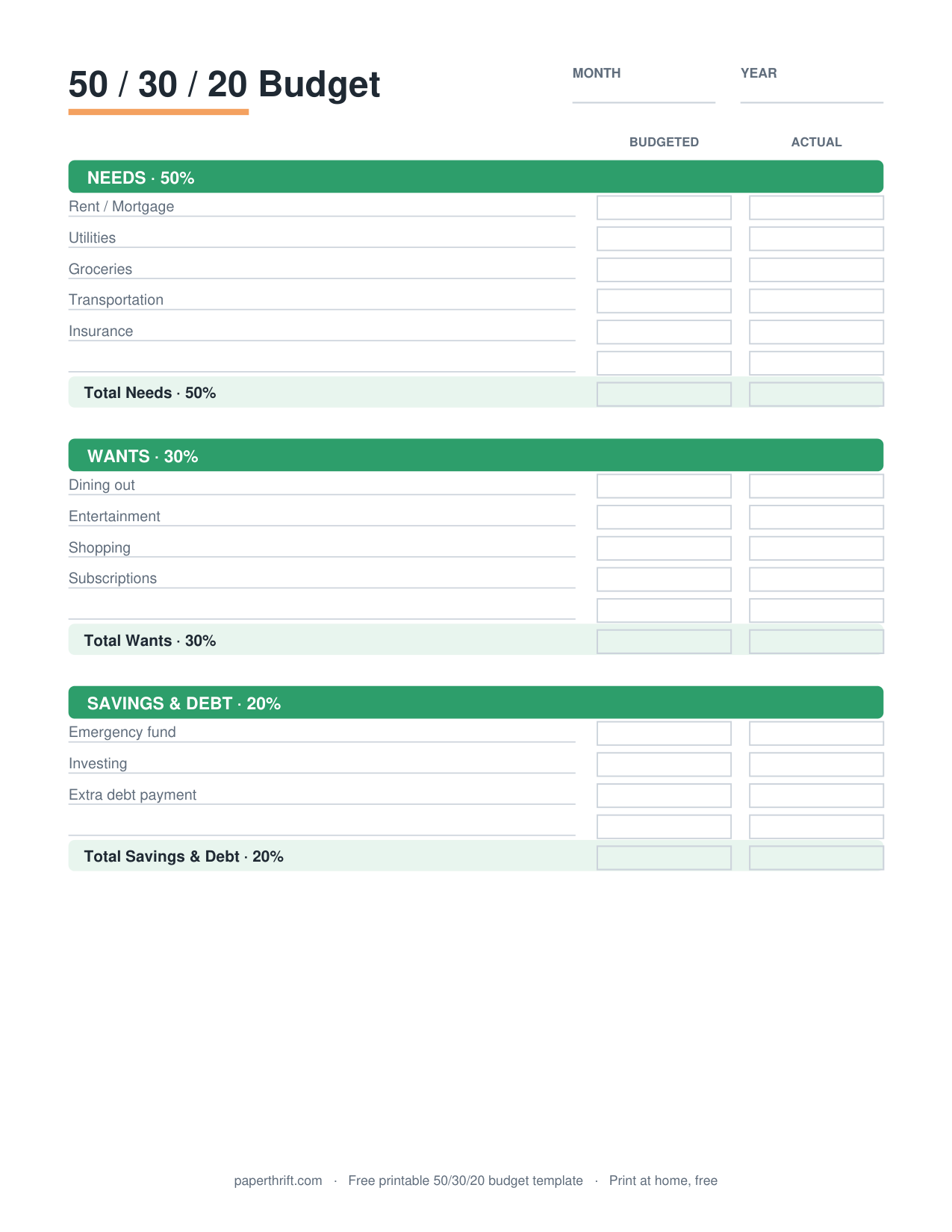
A common starting split is the 50/30/20 rule: 50% of take-home pay to needs, 30% to wants, and 20% to savings and debt. On a $3,000 monthly income that is $1,500 for needs, $900 for wants, and $600 for savings and debt.
Category percentages give beginners a sane starting point instead of a blank page. The 50/30/20 rule is the most popular: needs (housing, utilities, groceries, minimum debt payments) get 50%, wants (dining out, streaming, hobbies) get 30%, and savings plus extra debt payoff get 20%. These are guidelines, not laws. High-rent cities often push needs above 50%, so you trim the wants category to compensate.
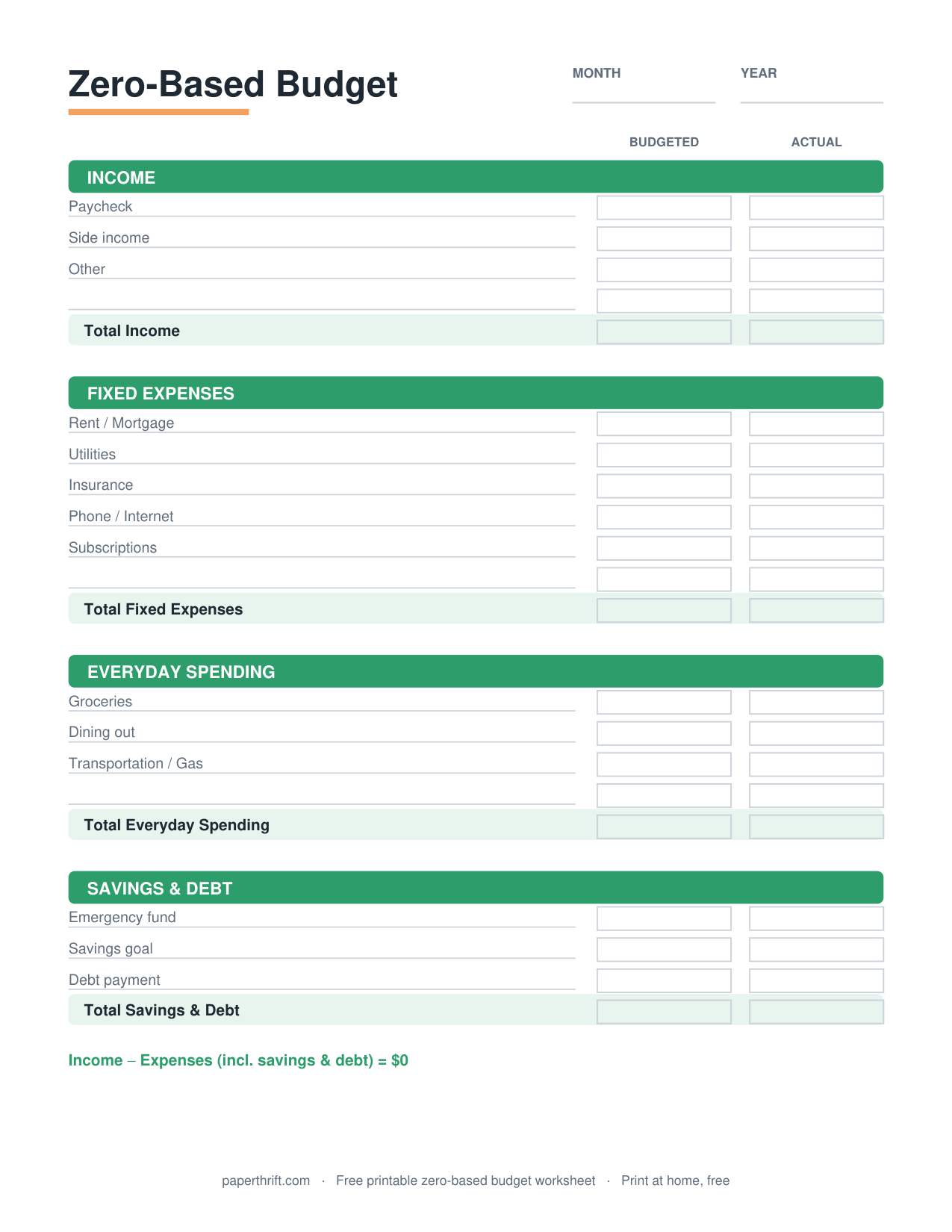
If percentages feel loose, a zero-based approach assigns every dollar a job until income minus expenses equals exactly zero. You can apply the percentage targets with a 50/30/20 budget worksheet, or go line-by-line with a zero-based budget template. To understand the math and tradeoffs behind each, read the 50/30/20 rule explained and zero-based budgeting explained.
Which budgeting method is best for beginners?
The best method is the one you will actually use. Beginners often start with the 50/30/20 rule for simplicity, the zero-based method for full control, or the cash envelope system for hands-on spending limits. All three work; pick the one that matches your habits.
There is no single best budget. There is the best budget for you. The 50/30/20 rule is the easiest entry point because it uses three buckets and rough percentages. The zero-based method gives the tightest control by assigning every dollar a job, which suits people who like detail. The cash envelope system uses physical cash sorted into category envelopes, making it ideal for anyone who overspends on cards.
Many beginners blend methods: a 50/30/20 framework for the big picture and envelopes for trouble categories like groceries and dining. Try a cash envelope system for variable spending, or a weekly budget if a full month feels overwhelming. Our guide on zero-based budgeting explained breaks down one of these methods in depth so you can choose with confidence instead of guessing.
How do you budget for irregular and yearly expenses?
Budget for irregular costs using sinking funds: divide each known yearly expense by 12 and save that amount monthly. A $600 car-insurance bill becomes $50 saved each month, so the bill is fully funded before it arrives instead of wrecking one paycheck.
The expenses that blow up budgets are rarely the monthly ones. They are the irregular ones: car registration, holiday gifts, annual subscriptions, and back-to-school costs. The fix is a sinking fund, a small monthly amount set aside for a known future bill. List each irregular expense, note its yearly total and due date, divide by the months until it is due, and save that slice every month.
This turns a $1,200 holiday season into twelve calm $100 deposits. Track each fund on a sinking funds tracker so you always know how much is set aside, and use a dedicated Christmas budget for the biggest seasonal spend. To see how the math works across multiple goals at once, read sinking funds explained.
How do you stick to a budget after you make it?
Stick to a budget by tracking spending daily, reviewing it weekly, and adjusting categories that run short. Pay bills on a schedule, automate savings, and use challenges like a no-spend month to build the habit. A budget only works when you revisit it.
Making a budget takes an hour; keeping it takes a habit. The single most powerful move is to track spending as you go. Every logged purchase is a tiny pause that curbs impulse buying. Review your numbers once a week, not once a month, so an overspent category gets caught early while you can still fix it. Pay bills on a set schedule so nothing slips into a late fee.
Automate the boring wins: set savings to transfer the day after payday so you save before you can spend. When motivation dips, a short challenge resets your habits fast. Use a bill payment tracker so no due date surprises you, a savings goal tracker to watch progress build, and a no-spend challenge or 100 envelope challenge to make saving feel like a game instead of a chore.
Prefer to start with numbers instead of a blank page? The free budget calculators give you a 50/30/20 split, a debt payoff date, or a savings timeline in seconds. The Consumer Financial Protection Bureau also publishes free budgeting tools and worksheets if you want an official companion to these printables.
Frequently asked questions
How do I make a budget for the first time?
Start by writing down your monthly take-home pay, then list every expense including bills, groceries, debt minimums, and fun money. Subtract expenses from income, aim for zero or higher, and track your spending all month. A free printable monthly budget worksheet makes the first attempt simple, with no email or signup needed.
What is the 50/30/20 rule?
The 50/30/20 rule splits take-home pay into 50% needs, 30% wants, and 20% savings and debt. On $3,000 a month that is $1,500 for needs, $900 for wants, and $600 for savings and debt. It is a popular beginner method because it uses three simple buckets instead of dozens of line items.
How much should I save each month?
A common target is 20% of your take-home income for savings and extra debt payoff, but any amount beats zero. If 20% is out of reach, start with 5% or a flat $50 and raise it over time. Automating the transfer the day after payday makes saving consistent and removes the temptation to spend it first.
Do I need an app to budget?
No. A budget needs a number for income, a list of expenses, and a habit of tracking, none of which require an app. Many people prefer pen and paper because writing purchases by hand slows impulse spending. Paperthrift offers free printable budget templates you can fill in at home with no signup.
Paperthrift provides free educational budgeting tools and printables. It does not offer financial, investment, or tax advice.