Seasonal · PDF
Christmas Budget Planner
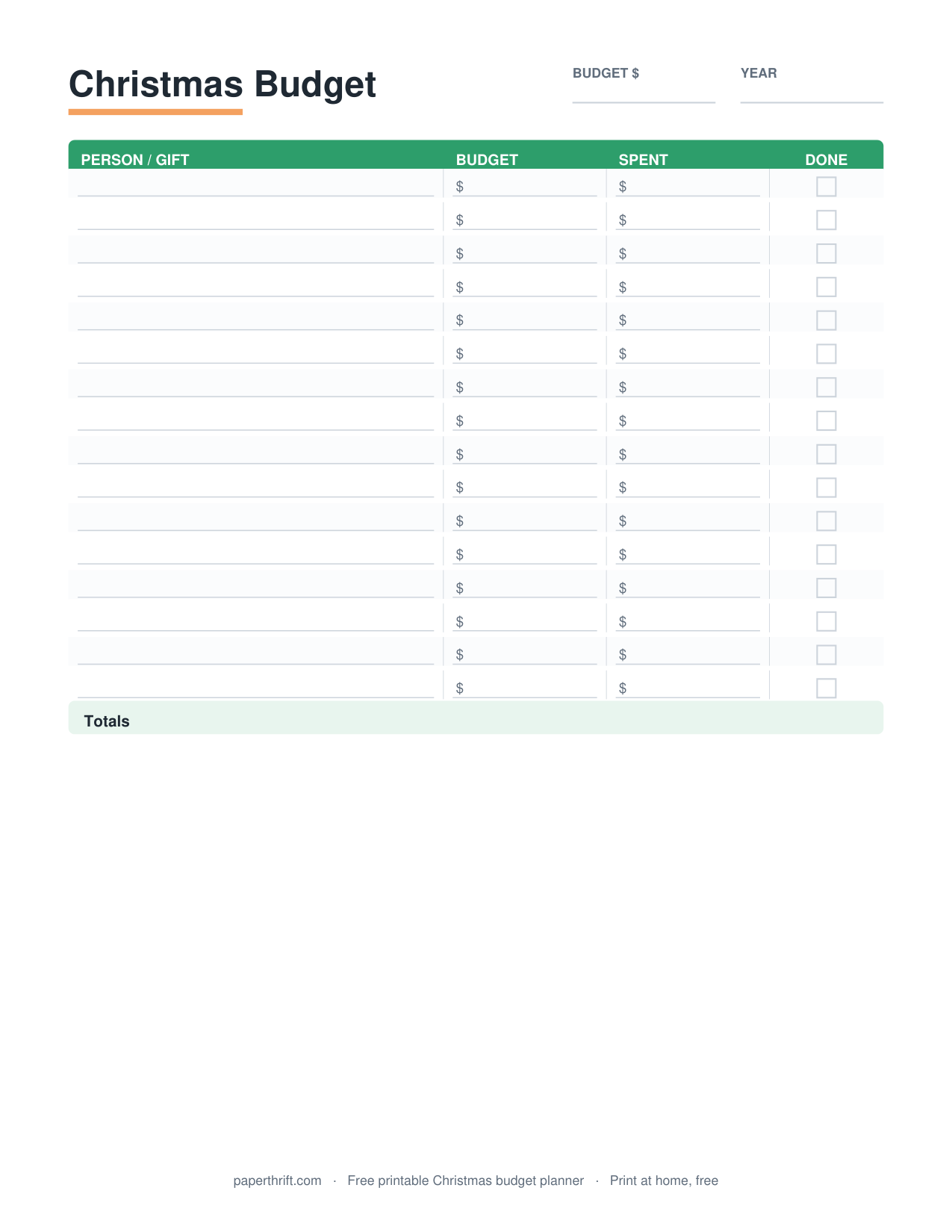
A Christmas budget planner is a printable worksheet that sets a total holiday spending limit, then divides it across categories (gifts, food, travel, decor, and cards) so planned expenses stay below available cash and the season ends without new debt.
Pick a color theme
What is a Christmas budget planner?
A Christmas budget planner is a printable worksheet that caps total holiday spending, then splits that cap across categories like gifts, food, travel, decorations, and cards. It compares planned costs to available cash so the season ends without new credit-card debt.
A Christmas budget planner turns a vague "don't overspend" goal into a written plan. You set one number, the total you can afford this holiday season, then assign that money to specific categories before you shop. Common categories are gifts, food and hosting, travel, decorations, wrapping and cards, charitable giving, and a small buffer for surprises.
The planner works because it makes trade-offs visible. When the gift column climbs, you see it immediately and can adjust another line instead of reaching for a credit card. This is the same logic behind a zero-based budget, where every dollar gets a job. Pair the planner with an expense tracker to log what you actually spend, and the gap between plan and reality stays small all December.
How do you make a Christmas budget?
Make a Christmas budget by setting a total spending cap from savings, listing everyone you'll buy for with a dollar amount each, adding food, travel, and decor costs, then trimming categories until the total fits your cap.
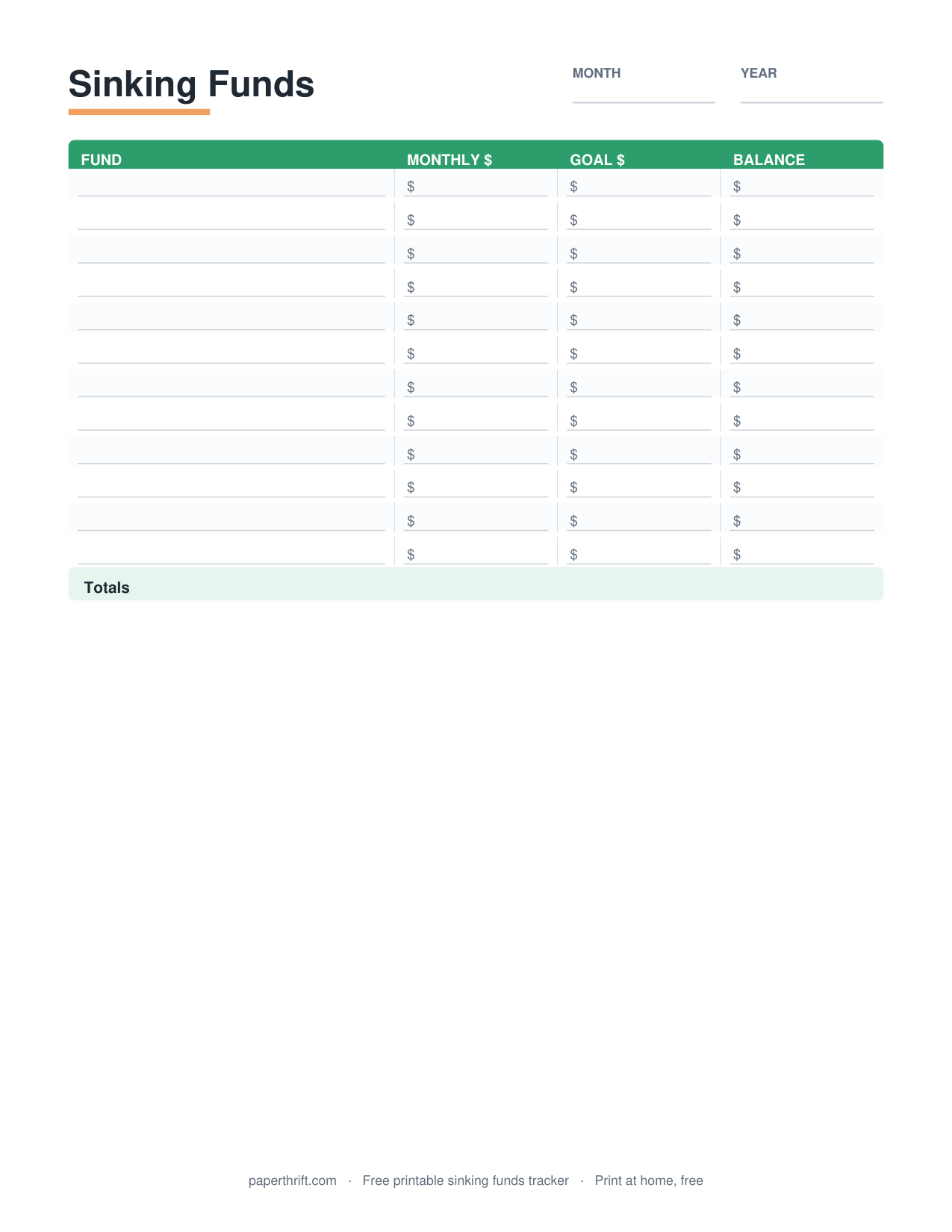
Start with the cap, not the gift list. This is the step most people skip. Decide the total amount you can pay for in cash, ideally money you saved through the year rather than money you'll owe in January. A dedicated Christmas sinking fund of $50 a month gives you $600 by December without a single painful withdrawal.
Next, list every gift recipient and write a target amount beside each name. Add food and hosting, travel, decorations, wrapping, and cards. Total it. If the number exceeds your cap, cut from the largest categories first: fewer recipients, homemade gifts, or a potluck instead of hosting alone. The how to make a budget guide covers this set-a-limit-then-allocate method in more detail, and it applies to holidays the same way it applies to a regular month.
How much should you spend on Christmas?
A safe Christmas budget is whatever you can pay in cash without borrowing, often 1 to 1.5 percent of annual take-home pay. On $50,000 net income that is roughly $500 to $750 total across gifts, food, travel, and decorations.
There is no universal "right" number, but the safest rule is simple: spend only what you can cover in cash. Holiday debt carried on a credit card at 24% APR can cost you well into the next year, turning a $600 December into far more by the time it is paid off.
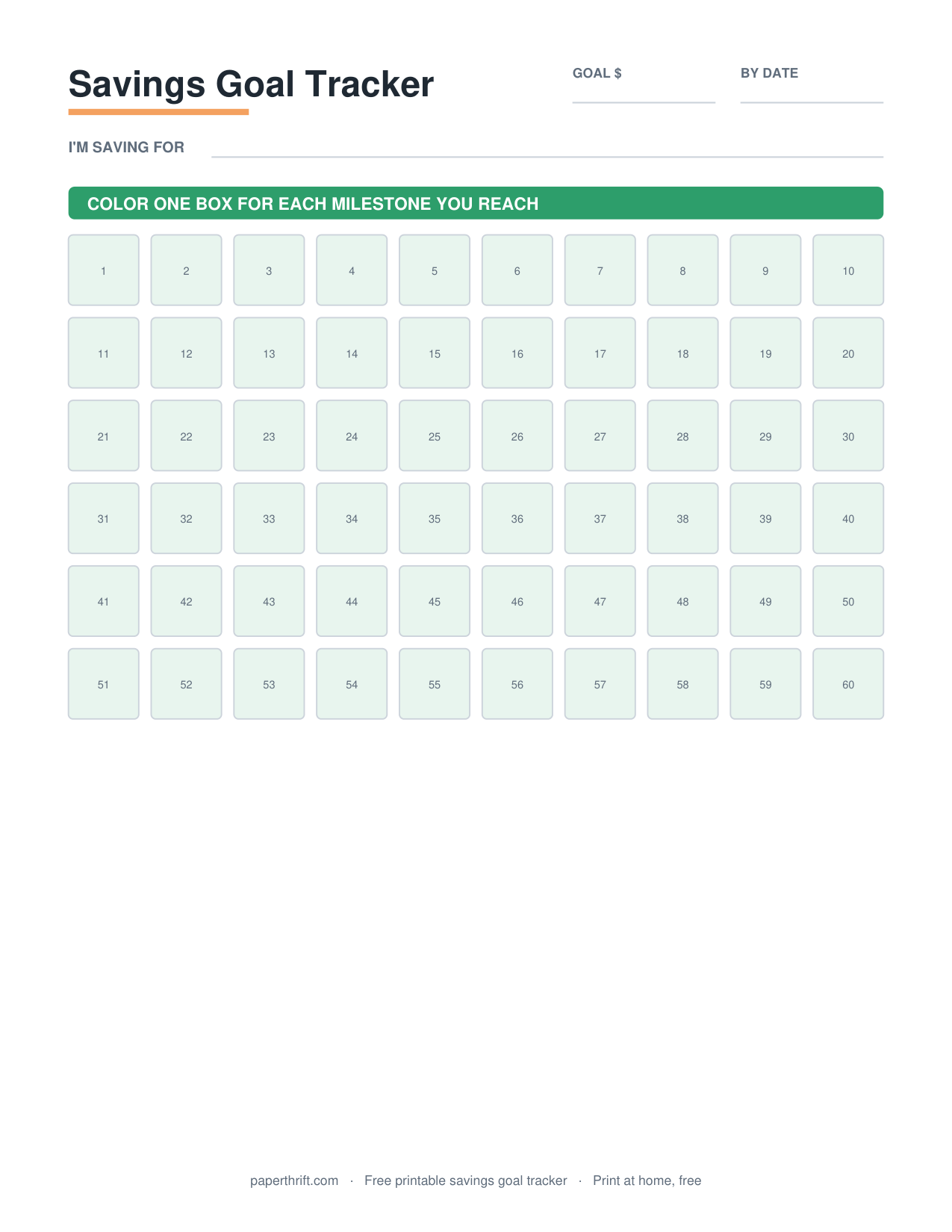
If you want a starting benchmark, many planners suggest keeping total holiday spending near 1 to 1.5 percent of your annual take-home pay. The point of the percentage is restraint, not precision. Your real ceiling is the cash you have set aside. Building that cash ahead of time through a savings goal tracker removes the December scramble entirely, and a no-spend challenge in November can free up extra room before the season starts.
Set your total first: enter your holiday spending target and the months left until December in the free savings goal calculator to get the monthly amount to put aside.
How to use this printable
- Set your total cap Decide the full amount you can spend in cash this holiday season, ideally from money you saved during the year, not money you'll owe in January. Write that number at the top of the planner.
- List every recipient Write down each person you're buying for and put a target dollar amount beside each name. Seeing the names and numbers together stops the gift list from quietly growing.
- Add the other categories Fill in food and hosting, travel, decorations, wrapping and cards, and a small buffer for surprises. These non-gift costs are what usually break a holiday budget.
- Total it and trim to fit Add every category. If the total is over your cap, cut from the biggest lines first (fewer recipients, homemade gifts, or a shared potluck) until the plan fits the cash you have.
- Track spending as you shop Log each purchase against its category so you can see what's left in real time. Update the planner after every shopping trip to keep the plan and reality in sync.
How to print it
- Print on US Letter (8.5 x 11 in) or A4. Choose US Letter or A4 in the print dialog and print at 100% scale (not Fit to Page) so the columns keep their spacing.
- Use black-and-white draft mode to save ink; the planner is designed to stay readable without color.
- Print one copy per holiday season and tuck it in your wallet or budget binder so it's with you while shopping.
- Set page margins to "Default" or "None" so the category columns and totals aren't cut off at the edges.
Frequently asked questions
Is the Christmas budget planner really free?
Yes. The Christmas budget planner is 100% free with no email or signup required. Click download, get the PDF instantly, and print it at home on US Letter or A4.
Do I need to sign up or give my email?
No. There is no email gate and no account. The PDF downloads directly so you can print it right away and start planning your holiday spending in minutes.
When should I start using a Christmas budget?
Start as early as possible, ideally a few months out so you can save the cash through a sinking fund. Even starting in November helps you set a cap and avoid impulse debt.
What categories should a Christmas budget include?
Include gifts, food and hosting, travel, decorations, wrapping and cards, charitable giving, and a small buffer for surprises. Listing non-gift costs is what keeps the total honest.
How is this different from a regular monthly budget?
A Christmas budget focuses one spending cap on seasonal categories like gifts and travel for a short window, while a monthly budget covers ongoing living costs across every month of the year.
Paperthrift provides free educational budgeting tools and printables. It does not offer financial, investment, or tax advice. For decisions about your specific situation, consider speaking with a qualified professional.