Budget Method · PDF
Zero-Based Budget Worksheet
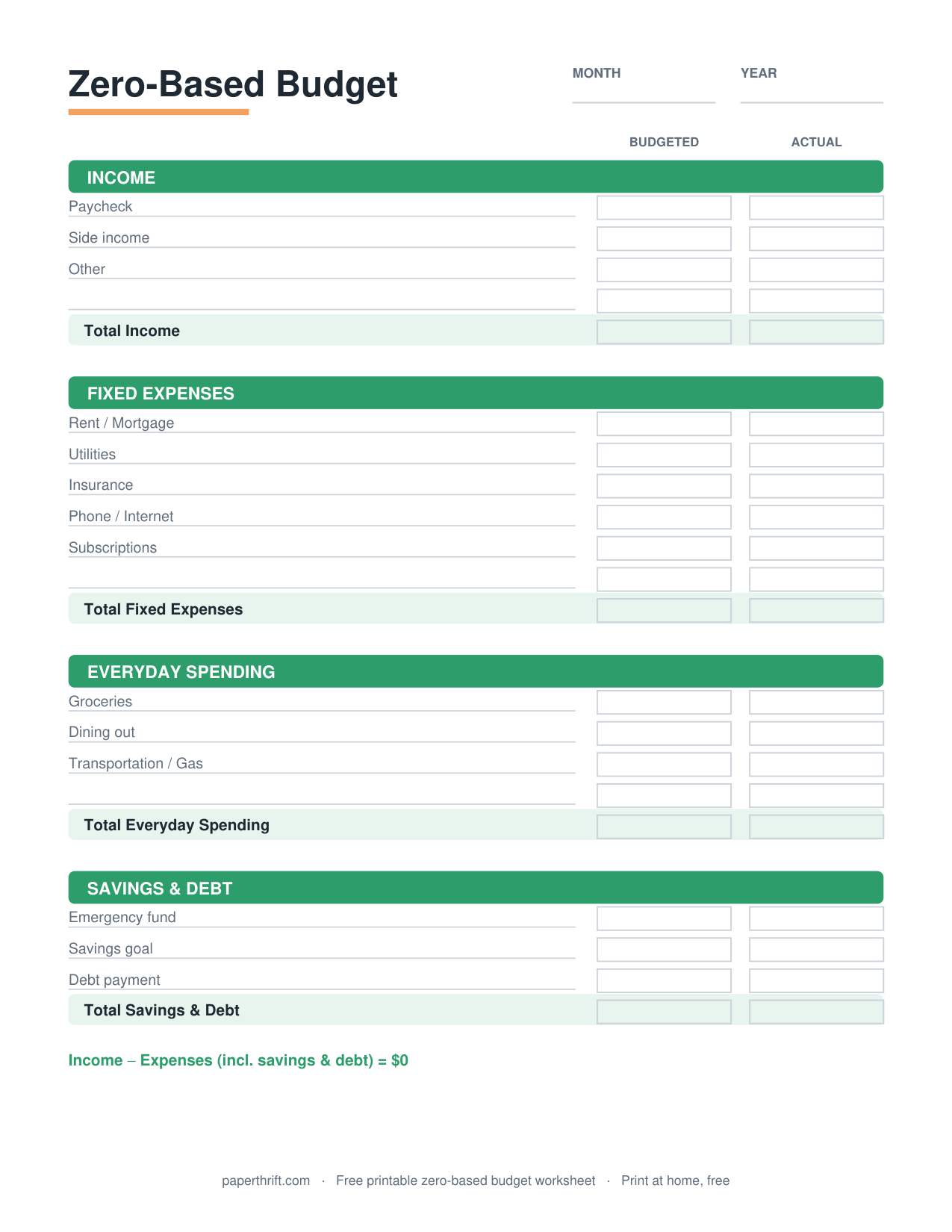
A zero-based budget is a method that assigns every dollar of income a job (spending, saving, or debt payoff) until income minus expenses equals zero. The zero-based budget worksheet is a free printable page that organizes those assignments by category each month.
Pick a color theme
What is a zero-based budget worksheet?
A zero-based budget worksheet is a printable page that lists your monthly income, then assigns every dollar to a category (bills, groceries, savings, and debt) until income minus expenses equals zero. The leftover line confirms your plan balances.
A zero-based budget worksheet turns the zero-based method into one fillable page. You write your total take-home income at the top, list each spending and saving category below, and assign a dollar amount to each one. The goal is simple: income minus everything you assign should equal $0. That zero does not mean you have nothing left. It means every dollar already has a destination, including the money flowing into savings and debt.
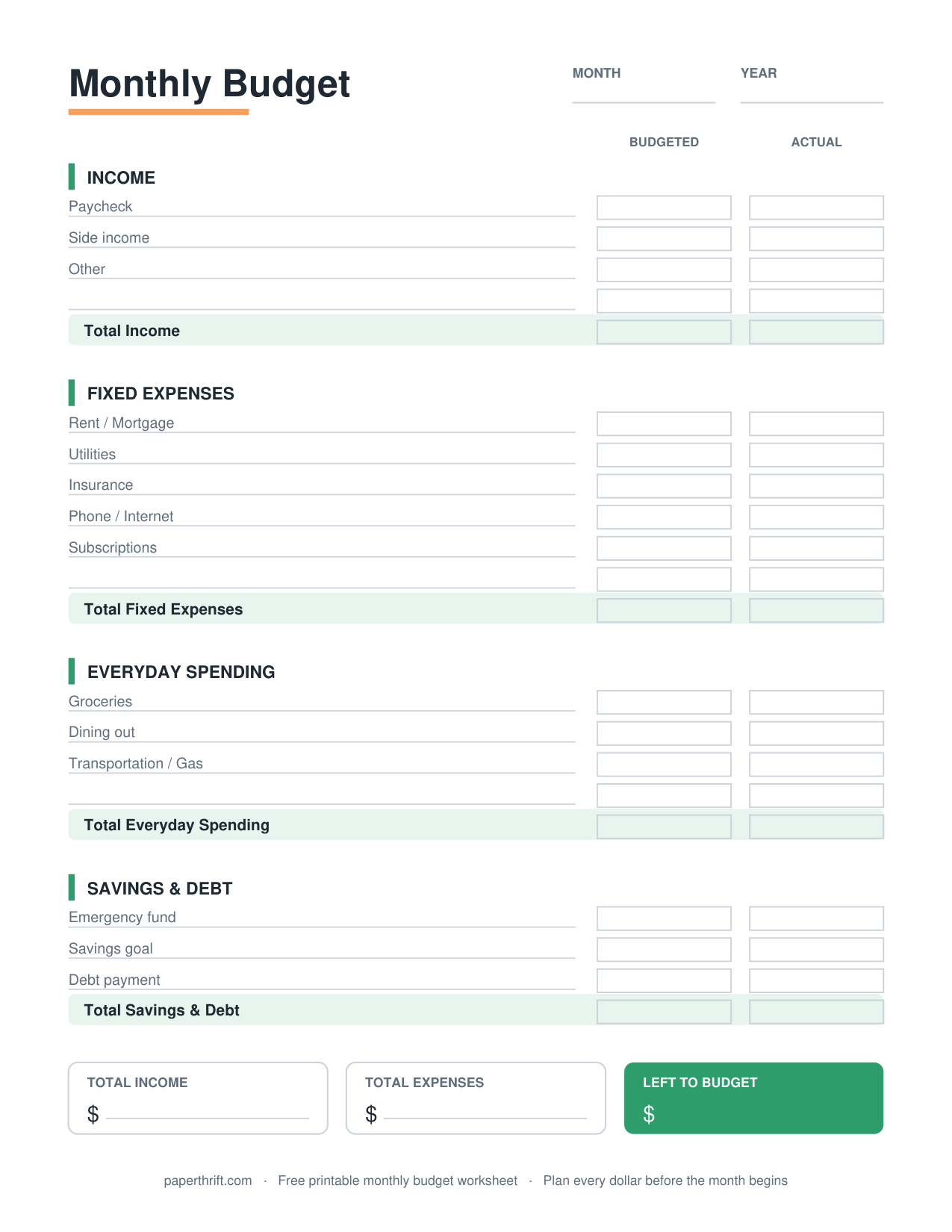
The worksheet covers the categories most households need: housing, utilities, groceries, transportation, insurance, savings, and debt payments. For deeper background on the system, read zero-based budgeting explained, and if you are brand new to budgeting, start with how to make a budget. Paperthrift's worksheet is 100% free, downloads instantly as a PDF with no email or signup, and prints at home on US Letter or A4.
How does a zero-based budget work?
Zero-based budgeting works by subtracting every planned expense, savings deposit, and debt payment from your income until the difference is zero. You build the plan before the month starts, so each dollar is assigned a purpose in advance rather than spent by default.
The math is one equation: income − (expenses + savings + debt) = $0. Start with $4,000 in monthly take-home pay. Assign $1,200 to rent, $400 to groceries, $300 to utilities, $250 to transportation, $500 to savings, and $350 to debt, and keep going until the categories add up to the full $4,000. When the bottom line reads zero, the budget is balanced and every dollar is accounted for.
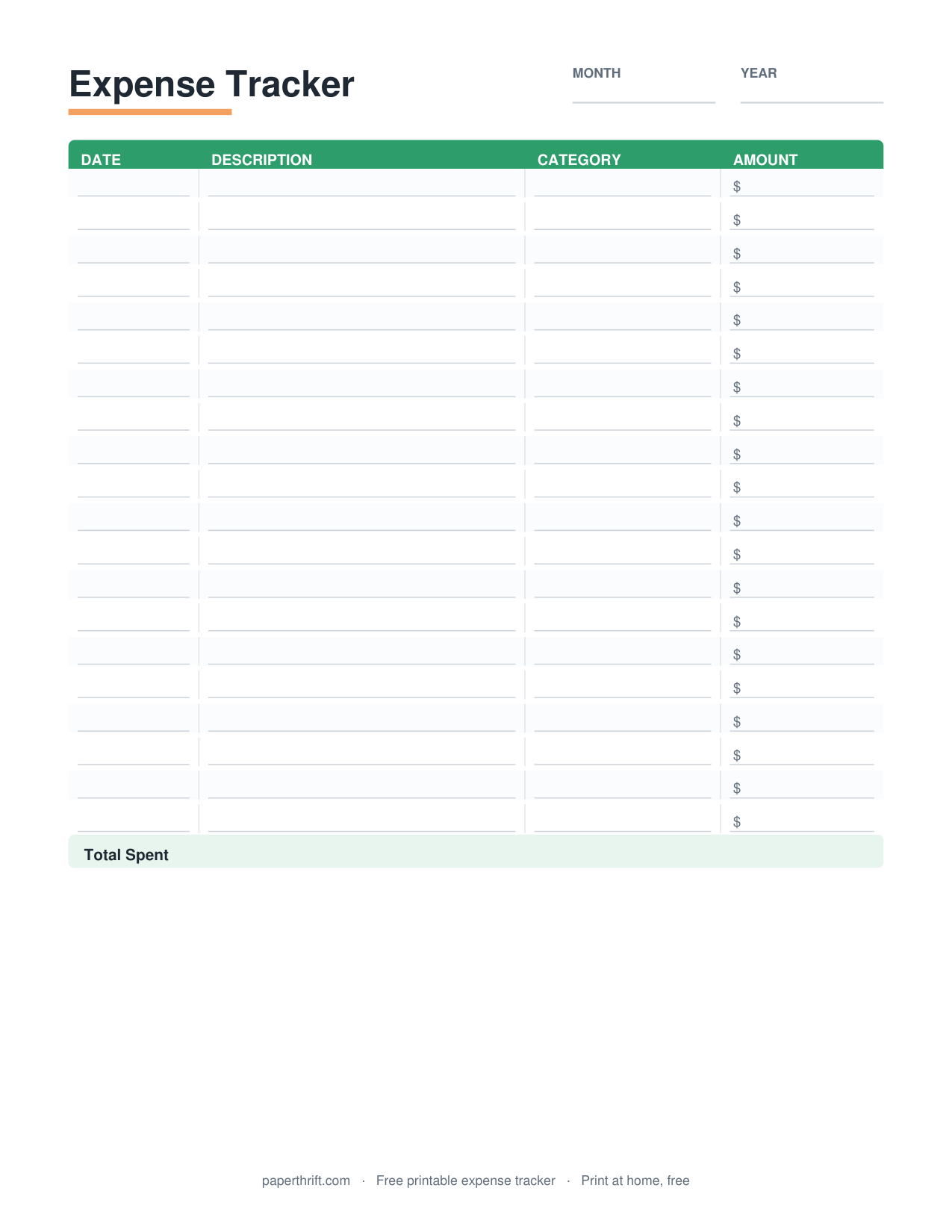
Unlike a method that only tracks fixed bills, zero-based budgeting forces you to name a job for the money that usually disappears on impulse buys. If a category runs short mid-month, you move dollars from another category instead of overspending overall. Pair the worksheet with an expense tracker to record what you actually spend, and a debt snowball tracker to watch balances fall as your assigned payments do their work.
Who is a zero-based budget for?
A zero-based budget is for people who want full control over every dollar: irregular earners, debt payoff focused households, and anyone who feels money slips away unaccounted for. It suits detail-oriented budgeters more than those wanting a hands-off split.
Zero-based budgeting fits freelancers and commission earners whose income changes monthly, because they rebuild the plan around whatever actually arrives. It also fits anyone aggressively paying off debt, since assigning a job to every dollar frees up the maximum amount for payments. Households tired of wondering where their paycheck went often find this method the clearest, because nothing is left vague.
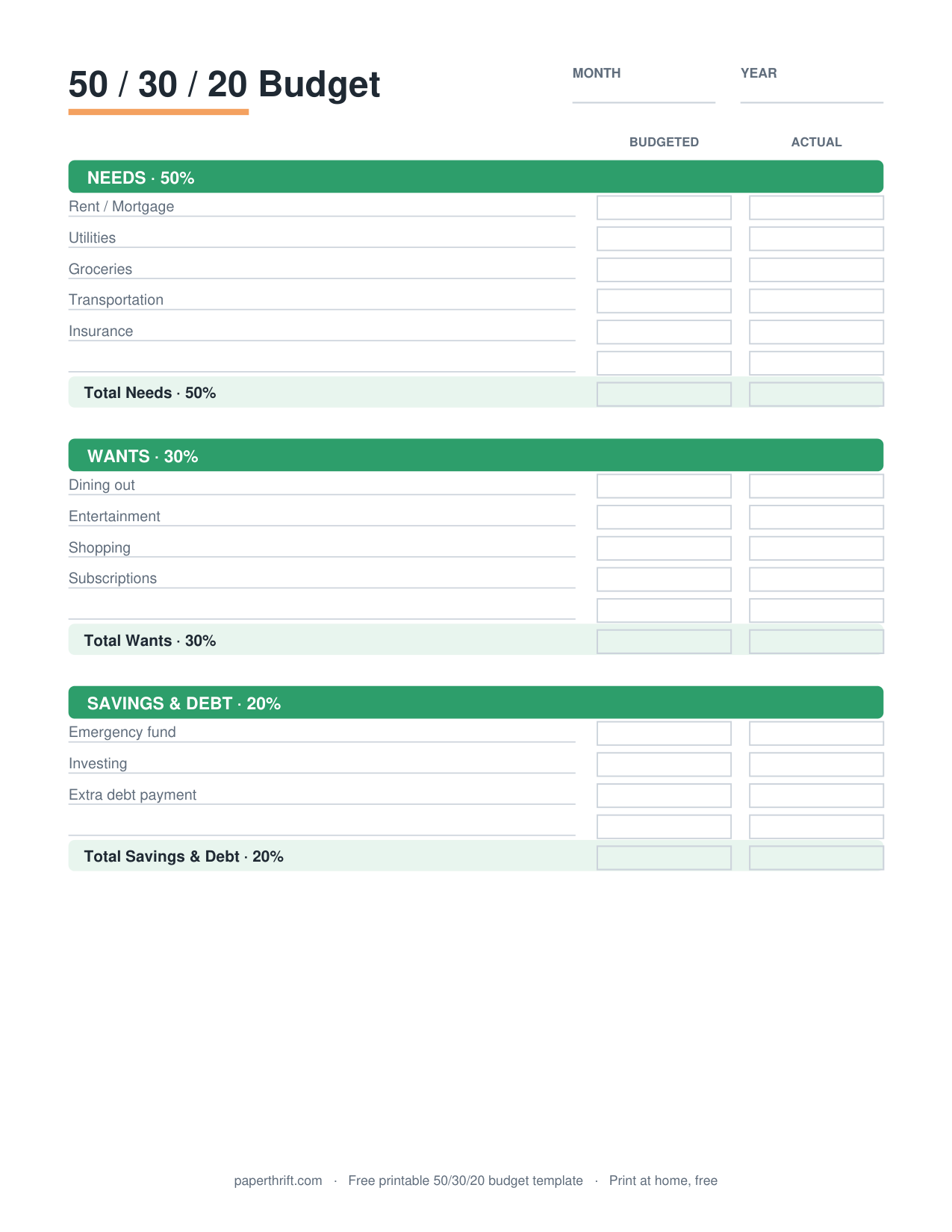
If you prefer a simpler, percentage-based approach, the 50/30/20 budget splits income into needs, wants, and savings without line-by-line assignment. See the 50/30/20 rule explained for how that compares. Many budgeters keep a monthly budget worksheet alongside the zero-based page, using one for the big-picture overview and the other to assign each dollar in detail.
How to use this printable
- Download and print Download the free zero-based budget worksheet PDF and print it on US Letter or A4, no email or signup required.
- Enter your monthly income Write your total take-home pay at the top. Combine all paychecks and any side income you expect this month.
- List every category Fill in each spending, saving, and debt category: housing, groceries, utilities, transportation, savings, and minimum debt payments.
- Assign every dollar Give each category a dollar amount until your assignments equal your income and the leftover line reads $0.
- Track and adjust Record real spending during the month and move dollars between categories so your budget stays balanced at zero.
How to print it
- Print at 100% scale (not "fit to page") so the category columns and dollar lines stay aligned.
- Choose US Letter in the US or A4 elsewhere. The worksheet is sized for both.
- Print one copy per month and keep them in a binder to compare spending over time.
- Use black-and-white draft mode to save ink, then write your dollar amounts in pen or pencil.
Frequently asked questions
Is the zero-based budget worksheet really free?
Yes. The zero-based budget worksheet is 100% free. It downloads instantly as a PDF with no email, no signup, and no payment. Print it at home as many times as you need.
Does "zero" mean I spend all my money?
No. Zero means every dollar has an assigned job, including money sent to savings and debt. Income minus expenses equals zero because savings deposits count as assigned dollars, not leftover cash.
What's the difference between zero-based and 50/30/20 budgeting?
Zero-based budgeting assigns every dollar to a specific category until the balance is zero. The 50/30/20 budget splits income into broad percentages (50% needs, 30% wants, 20% savings) without line-by-line assignment.
Can I use a zero-based budget with irregular income?
Yes. Zero-based budgeting suits irregular income well. Build a fresh plan each month using the income you actually receive, assigning every available dollar before spending begins.
What size paper does the worksheet print on?
The worksheet prints on both US Letter (8.5 x 11 in) and A4. Print at 100% scale rather than "fit to page" to keep the columns and dollar lines properly aligned.
Paperthrift provides free educational budgeting tools and printables. It does not offer financial, investment, or tax advice. For decisions about your specific situation, consider speaking with a qualified professional.