Guide
The 50/30/20 Rule Explained
The 50/30/20 rule is a budgeting method that divides after-tax income into three buckets: 50% for needs, 30% for wants, and 20% for savings and debt payoff. It gives every paycheck a simple, flexible structure.
What is the 50/30/20 rule?
The 50/30/20 rule is a budgeting method that splits after-tax income into 50% needs, 30% wants, and 20% savings and debt repayment. Elizabeth Warren, then a Harvard law professor, and her daughter Amelia Warren Tyagi popularized it in their 2005 book All Your Worth to simplify spending decisions.
The 50/30/20 rule turns budgeting into three percentages instead of dozens of line items. You take your monthly take-home pay, multiply it by 0.50, 0.30, and 0.20, and you have three spending limits to work within. The method comes from Elizabeth Warren and Amelia Warren Tyagi's book All Your Worth: The Ultimate Lifetime Money Plan.
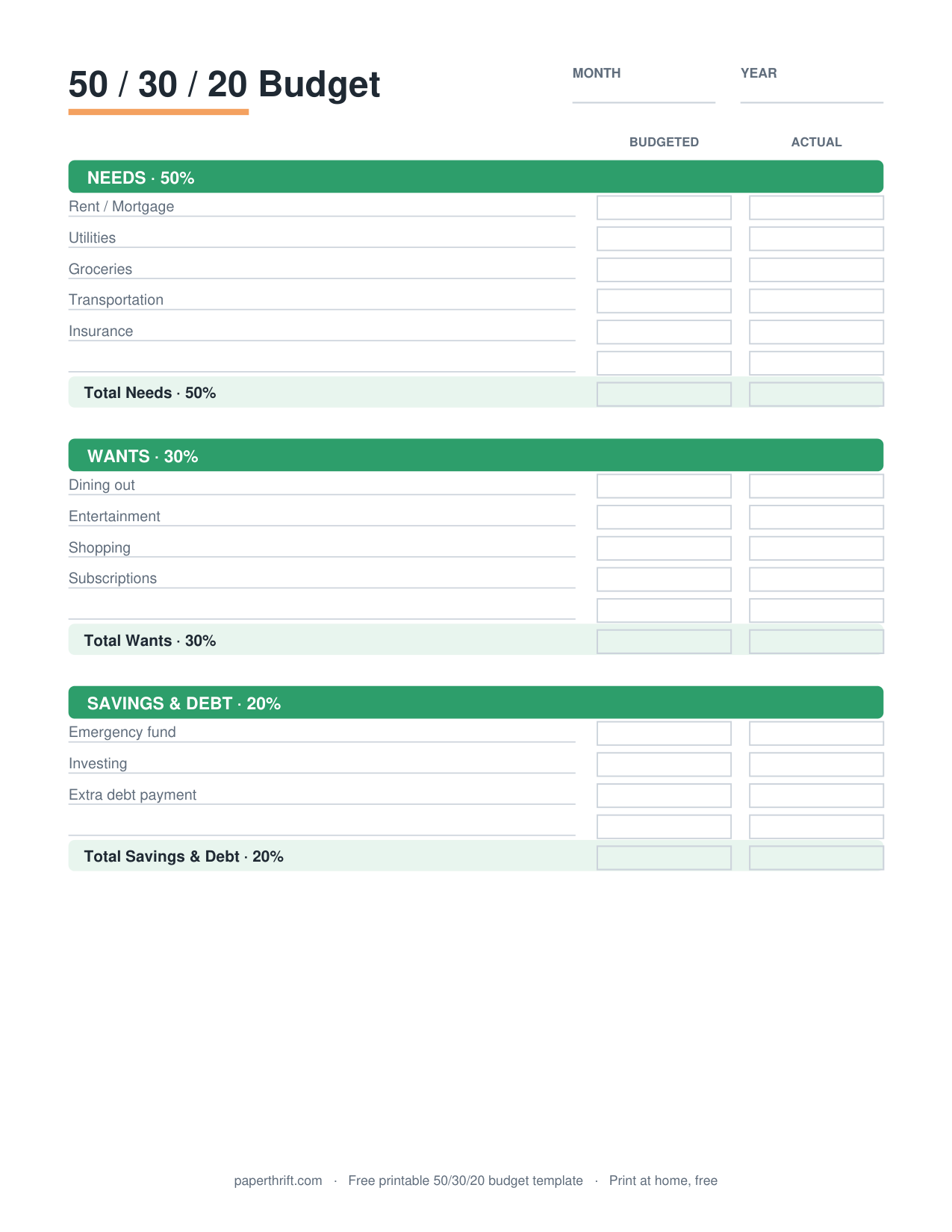
The appeal is speed. A beginner can set up the framework in five minutes and start using it the same day. Because it groups spending into broad categories rather than tracking every coffee, it suits people who abandoned stricter systems. To run the numbers on real income, a 50/30/20 budget worksheet does the math for each bucket, and the how to make a budget guide walks through the wider setup if this is your first budget.
How does the 50/30/20 rule work?
You start with after-tax income, then assign 50% to needs (housing, groceries, utilities), 30% to wants (dining out, hobbies, streaming), and 20% to savings and extra debt payments. Each percentage becomes a hard spending ceiling for the month.
Step one is finding your after-tax (net) income, the amount that actually lands in your bank account, not your gross salary. On a $4,000 monthly take-home, the math is clean: $2,000 for needs, $1,200 for wants, and $800 for savings and debt.
| Bucket | Share | Amount | What it covers |
|---|---|---|---|
| Needs | 50% | $2,000 | Rent/mortgage, utilities, groceries, insurance, transport, minimum debt payments |
| Wants | 30% | $1,200 | Dining out, subscriptions, travel, hobbies, shopping |
| Savings & debt | 20% | $800 | Emergency fund, retirement, and extra debt payoff above the minimum |
Needs (50%) are expenses you cannot skip: rent or mortgage, minimum debt payments, utilities, insurance, transportation, and basic groceries. Wants (30%) are lifestyle choices: restaurants, subscriptions, travel, and shopping. Savings (20%) covers your emergency fund, retirement, and any debt payment beyond the minimum.
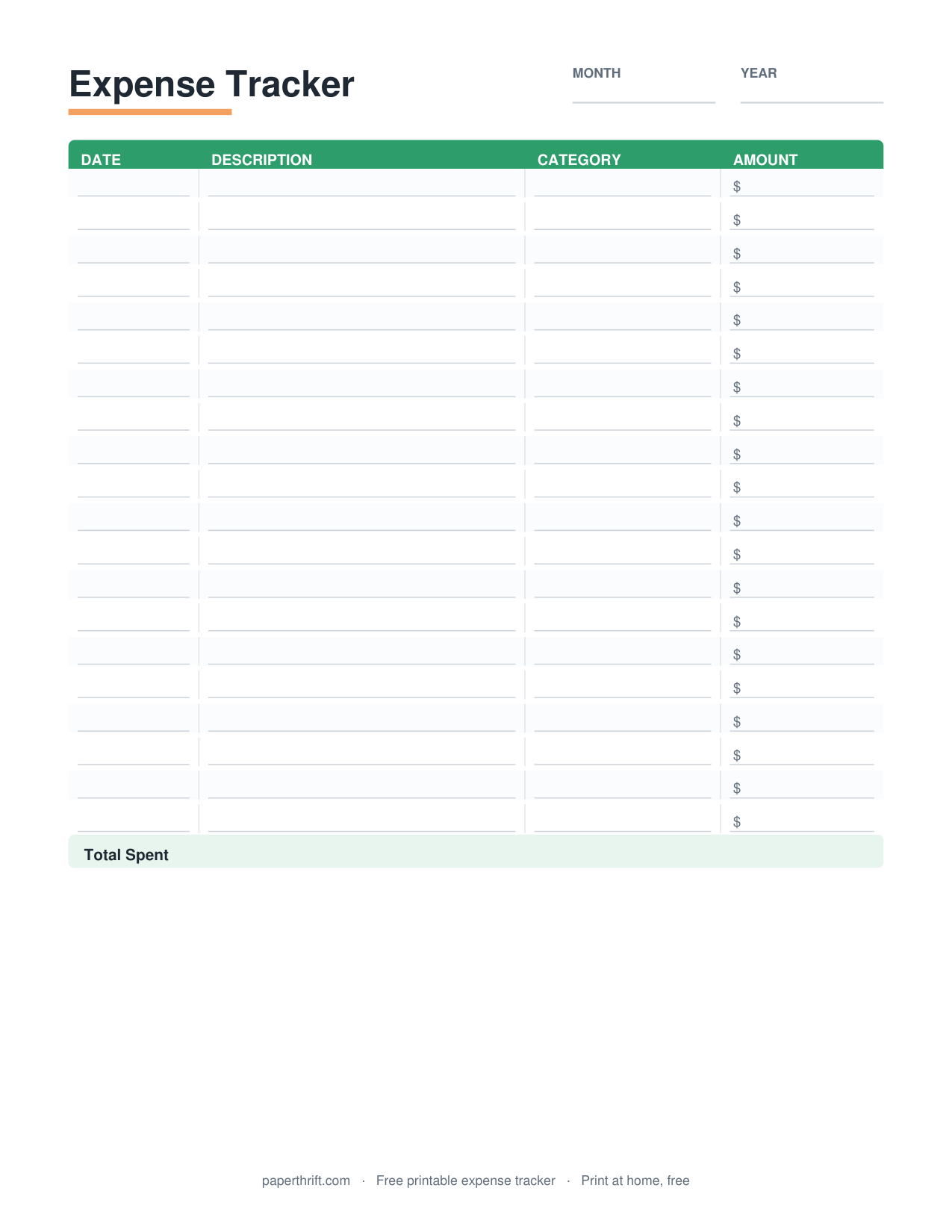
The tricky part is sorting borderline items honestly. A gym membership is usually a want, not a need. Track real spending for one month with an expense tracker before you label categories, and split fixed bills onto a bill payment tracker so nothing in the needs bucket slips through unpaid.
What counts as a need, want, or savings?
Needs are non-negotiable survival costs like housing, utilities, minimum debt payments, and groceries. Wants are optional lifestyle spending like dining out and subscriptions. Savings includes emergency funds, retirement contributions, and any debt payment above the required minimum.
The line between a need and a want trips up most beginners. A useful test: if you stopped paying it, would there be a real consequence (eviction, a late fee, no way to get to work)? If yes, it is a need. Rent, electricity, car insurance, and the minimum on your credit card all pass that test.
Wants are the comfortable extras: takeout, a streaming bundle, a weekend trip, brand-name groceries when store-brand would do. They make life enjoyable, and the 30% bucket is meant to be spent guilt-free once needs and savings are covered.
The savings bucket does double duty: it builds your future and shrinks your debt. Park sinking-fund goals like car repairs or holidays on a sinking funds tracker, funnel any extra debt payoff into a debt payoff tracker, and keep recurring subscriptions visible on a subscription tracker so wants don't quietly creep into your needs total.
When should you adjust the 50/30/20 rule?
Adjust the 50/30/20 rule when high housing costs push needs above 50%, when aggressive debt payoff or savings goals demand more than 20%, or when a low income leaves little room for wants. The percentages are a starting point, not a law.
The original 50/30/20 split assumes housing costs stay reasonable, but in high-cost cities rent alone can swallow 40% of take-home pay. When needs exceed 50%, a realistic alternative is a 60/20/20 or 60/30/10 split until income rises or housing changes. The framework still works. You just move the dials.
People attacking debt or chasing a big goal often flip toward 50/20/30, putting 30% toward savings and debt. If you carry high-interest balances, that extra firepower pairs well with the debt snowball vs avalanche decision and a debt snowball tracker to keep momentum visible.
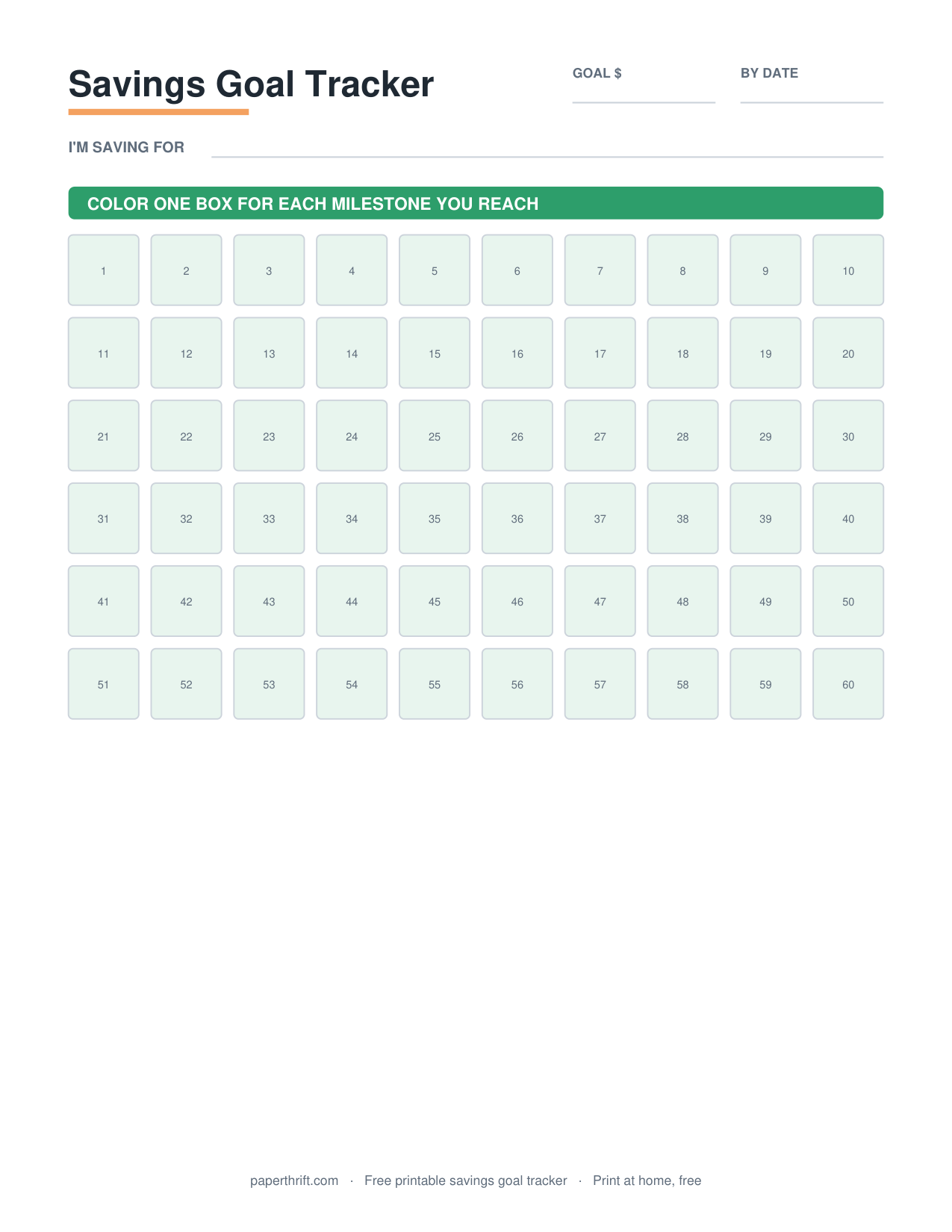
Low earners face the opposite squeeze. Needs may take 70% or more, leaving almost nothing for wants. That is not a failure of the method; it is a signal to focus on the savings bucket in small steps. A savings goal tracker makes even a $25 weekly contribution feel like progress while you work toward the standard split.
What are the pros and cons of the 50/30/20 rule?
The 50/30/20 rule is simple, flexible, and beginner-friendly, building savings automatically. Its drawbacks are that fixed percentages ignore local cost differences, the broad categories can hide overspending, and the 20% savings target may be too low for aggressive goals or high earners.
On the plus side, the rule removes decision fatigue. Three buckets are easy to remember, and the built-in 20% savings line means you are funding your future without a separate plan. It scales as income grows and forgives the occasional overspend better than a strict line-item system.
The cons are real, though. The percentages assume an average cost of living, so they strain in expensive metros and leave slack in cheap ones. Broad categories can also mask trouble. You might hit your 30% wants ceiling while a single subscription habit quietly balloons.
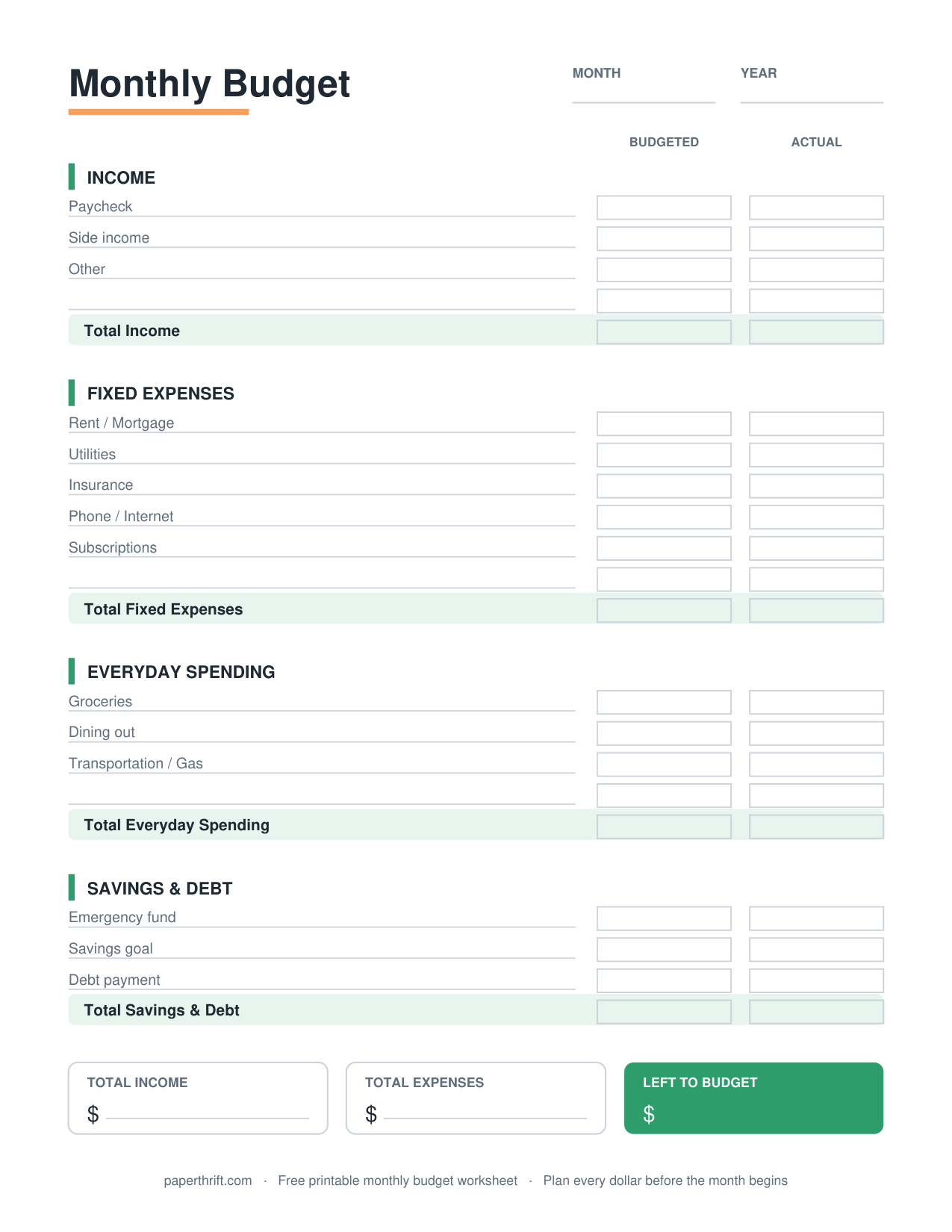
If you want tighter control, a stricter method gives every dollar a job. Compare the trade-offs in zero-based budgeting explained, or test a more granular layout with a monthly budget worksheet alongside your 50/30/20 percentages to see which level of detail you actually stick with.
How do you start a 50/30/20 budget today?
Calculate your monthly after-tax income, multiply by 0.50, 0.30, and 0.20 to set three spending limits, sort your expenses into needs and wants, then automate the 20% savings transfer. Review the buckets at each paycheck and adjust as needed.
Start by pinning down one number: your average monthly take-home pay. If your income varies, average the last three months. Multiply that figure by each percentage to get your three dollar limits, then write them where you'll see them.
Next, list last month's spending and drop each item into needs or wants. This is where most people learn their needs already exceed 50%, which tells you exactly where to adjust. Automating the 20% transfer on payday, so savings leaves before you can spend it, is the single habit that makes the rule stick.
If your pay arrives every two weeks, map the buckets to your pay cycle with a biweekly paycheck budget so each check has its own plan. Once the framework feels natural, the how to make a budget guide covers irregular income, debt, and savings goals in more depth.
Want your own split without the math? The free 50/30/20 budget calculator turns your take-home pay into all three targets instantly. The rule itself was popularized by Senator Elizabeth Warren in the book All Your Worth; Investopedia's overview of the 50/30/20 rule covers its history in more depth.
Frequently asked questions
Is the 50/30/20 rule based on gross or net income?
The 50/30/20 rule is based on net (after-tax) income, the money that actually reaches your bank account. Using gross income would overstate every bucket, since taxes, Social Security, and pre-tax deductions are already gone before you can budget them.
What if my needs are more than 50% of my income?
If your needs exceed 50%, the rule still works. You just shift the percentages, often to 60/20/20 or 60/30/10. High housing costs are the usual cause. Treat the standard split as a target to grow into as income rises or expenses fall, not a strict requirement.
Does the 20% savings include paying off debt?
Yes. The 20% bucket covers savings, investing, and any debt payment above the minimum. Minimum required debt payments count as needs in the 50% bucket, while extra payments that shrink your balance faster belong in the 20% savings-and-debt category.
Is the 50/30/20 rule good for beginners?
Yes. The 50/30/20 rule is one of the most beginner-friendly budgets because it uses three simple percentages instead of dozens of categories. You can set it up in minutes, it builds savings automatically, and it forgives small overspends better than stricter line-item methods.
Paperthrift provides free educational budgeting tools and printables. It does not offer financial, investment, or tax advice.