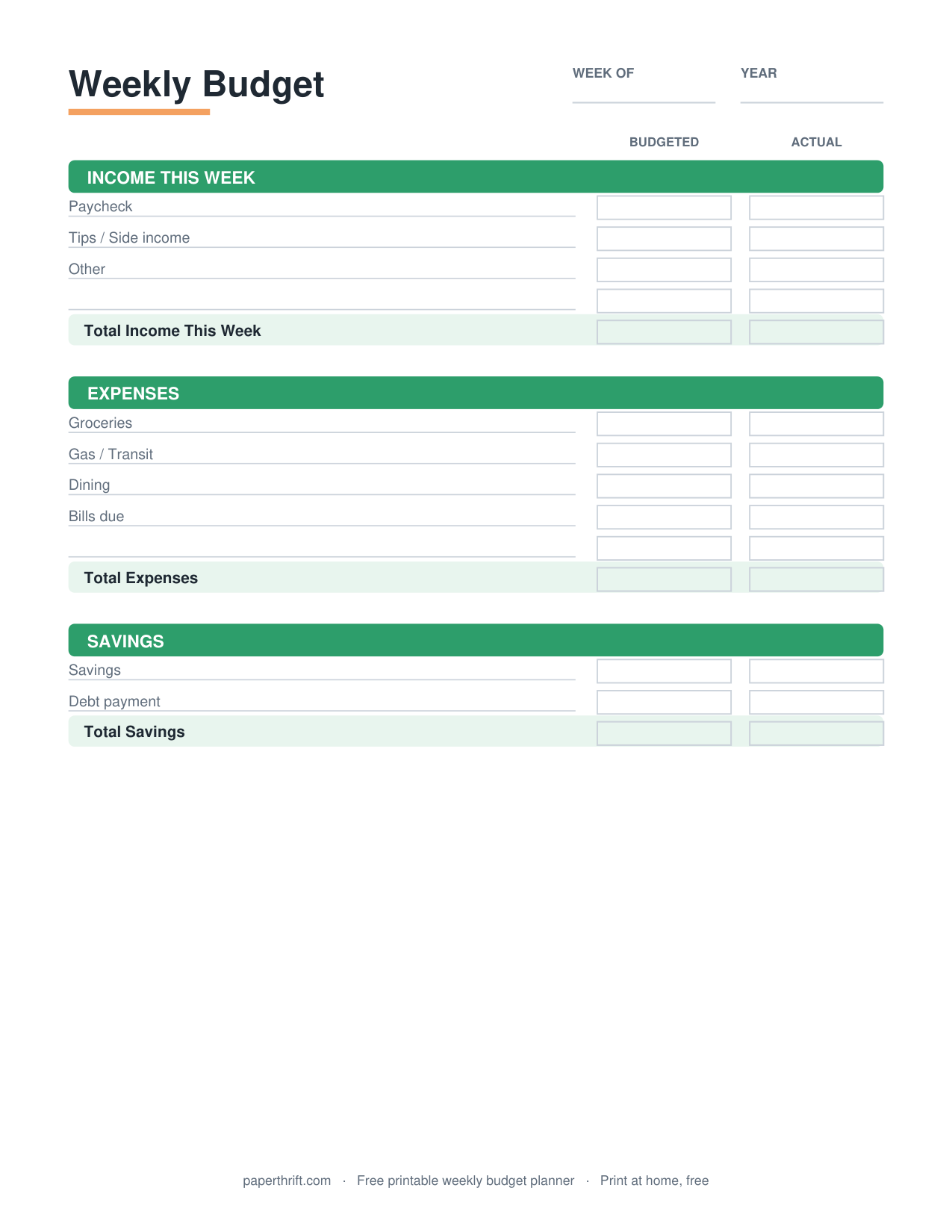
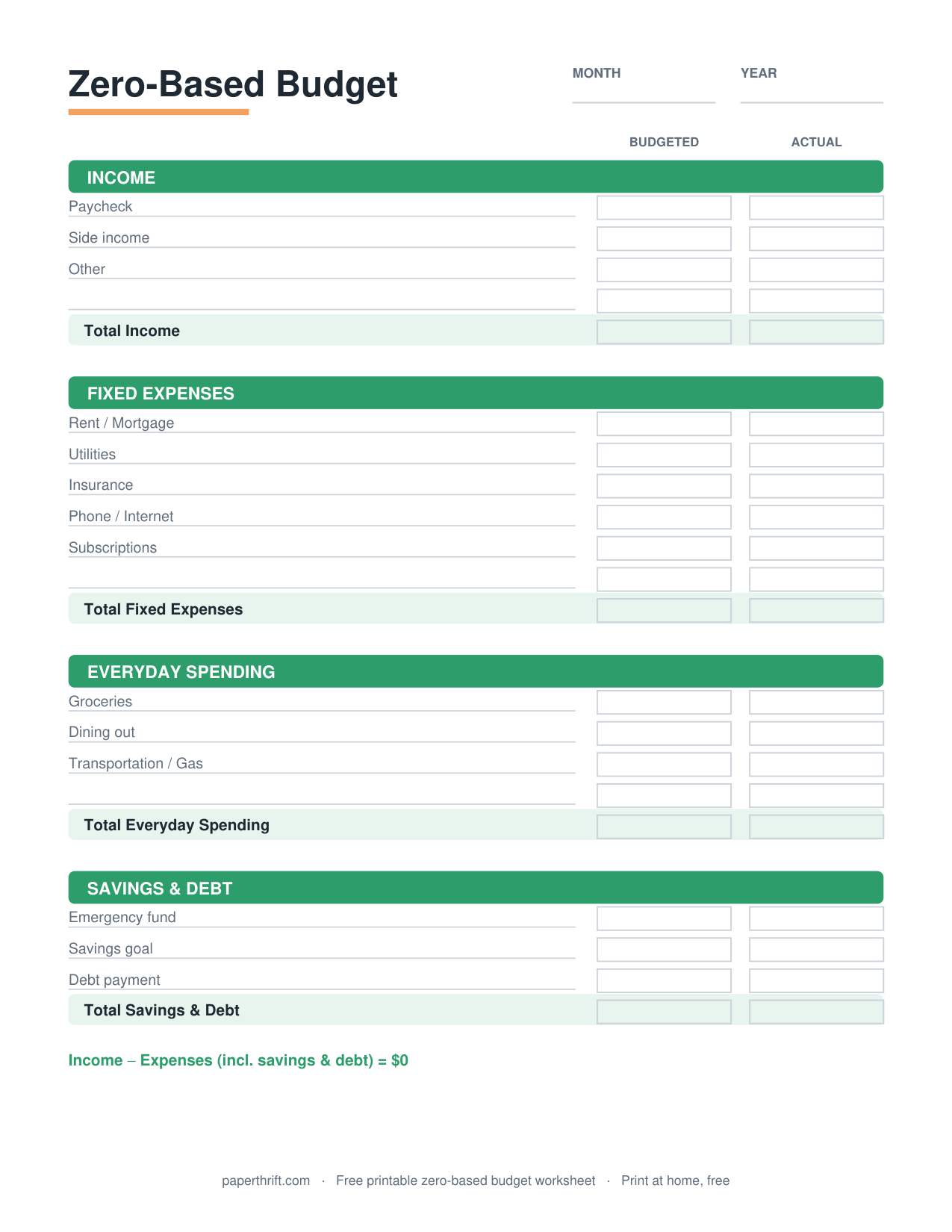
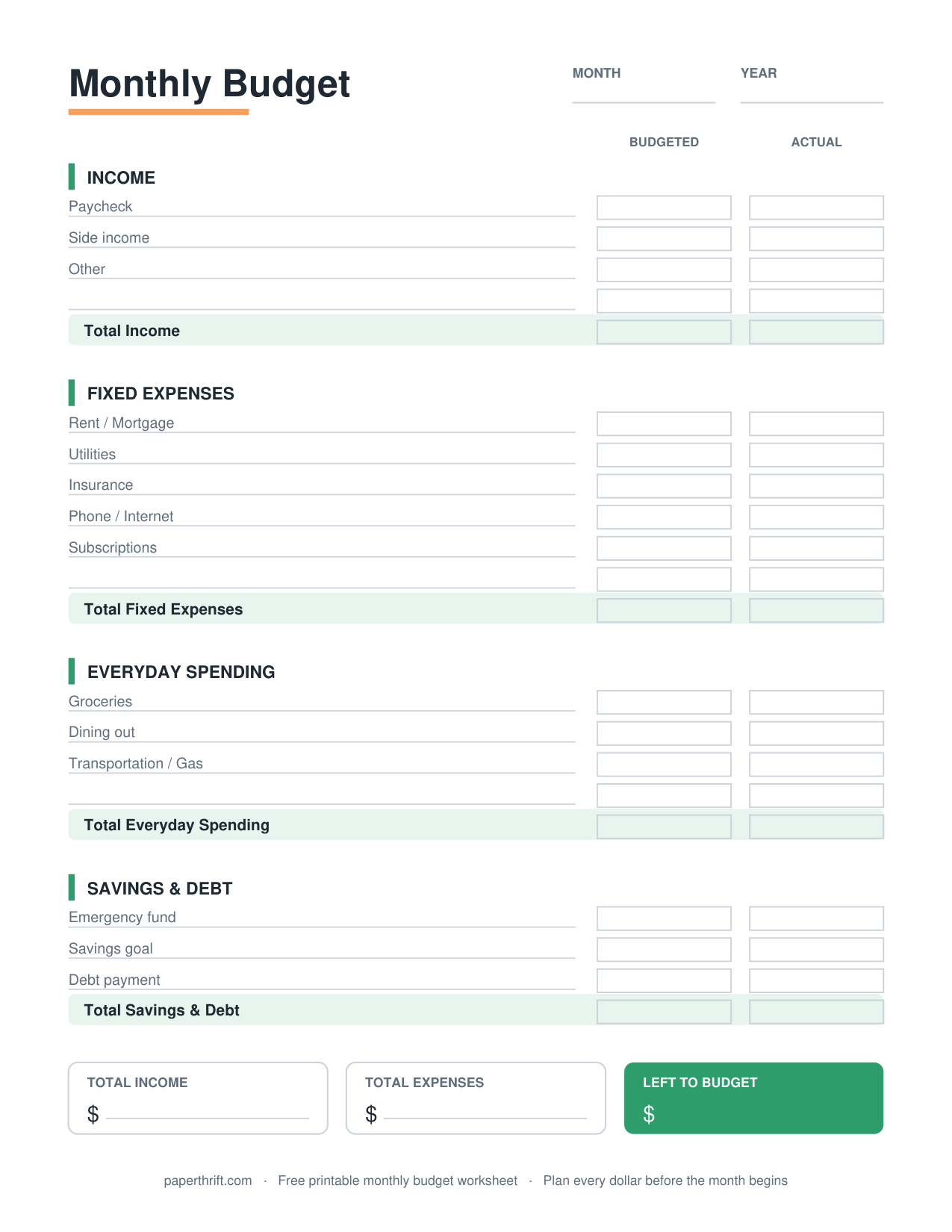
Budget · PDF
Biweekly Paycheck Budget
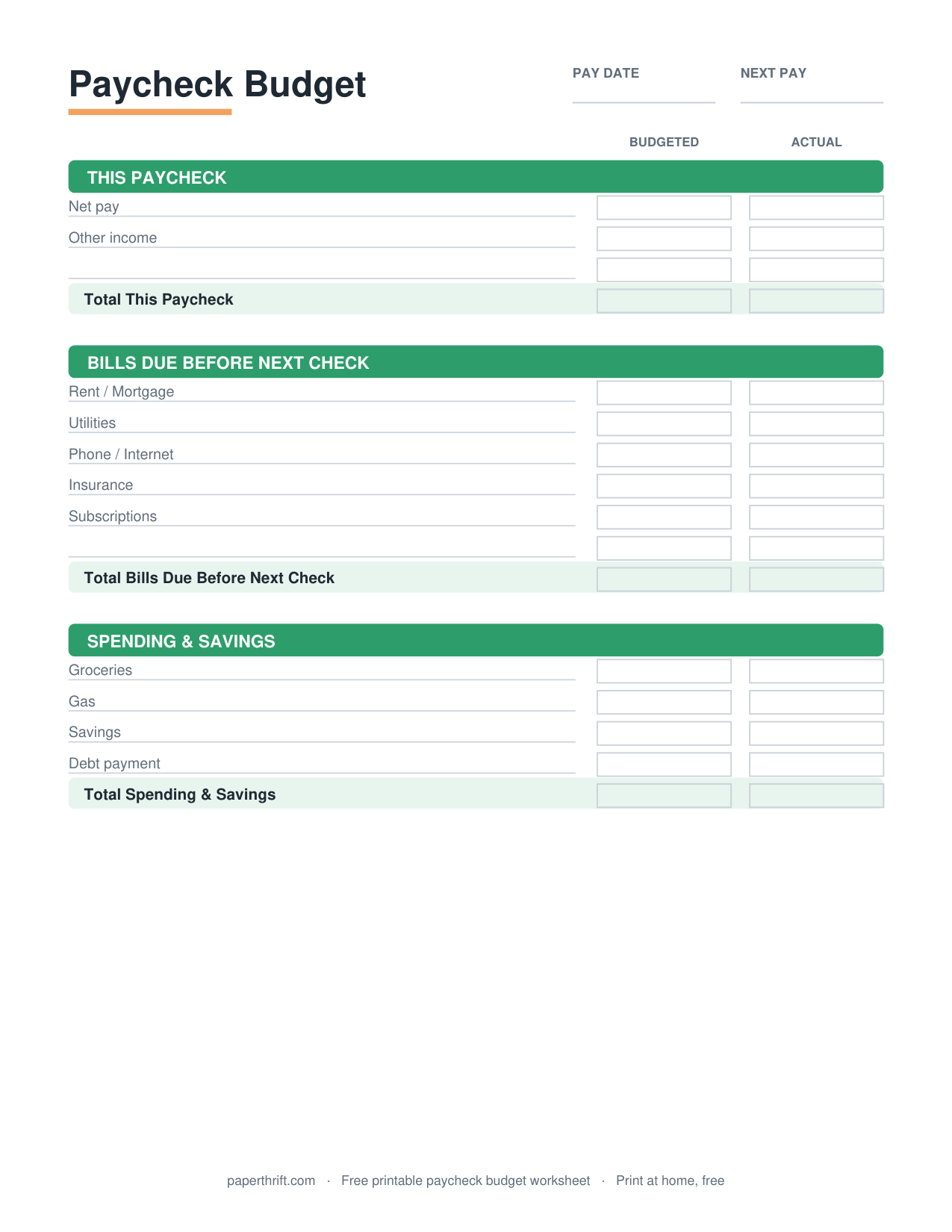
A biweekly paycheck budget is a per-paycheck plan that assigns each of your 26 yearly paychecks a job (bills, spending, saving, and debt) by splitting monthly expenses across the two checks that arrive every two weeks until each paycheck balances to zero.
Pick a color theme
What is a biweekly paycheck budget?
A biweekly paycheck budget is a per-paycheck plan that divides your monthly bills and goals across the 26 paychecks you receive every two weeks. Each paycheck gets assigned to specific expenses, so money is allocated when it actually arrives instead of monthly.
A biweekly paycheck budget matches your budget to your pay rhythm. Most bills are monthly, but a biweekly paycheck lands every 14 days, which produces 26 paychecks a year instead of 24. This printable assigns each paycheck a clear job: rent or mortgage, utilities, groceries, debt payments, and savings. Instead of guessing whether one check covers everything, you list which bills come due before the next deposit and fund only those.
This method works alongside any framework. If you assign every dollar until each paycheck reaches zero, you are using zero-based budgeting at the paycheck level. If you prefer percentages, the 50/30/20 budget splits each check into needs, wants, and savings. Pair it with an expense tracker to record what you actually spend, and the plan stays accurate week to week.
How do you budget biweekly paychecks?
To budget biweekly paychecks, list all monthly bills with due dates, split each paycheck to cover the bills due before the next deposit, fund savings and debt from each check, then track spending until every paycheck balances to zero.
Start by writing down your two paycheck amounts and their deposit dates for the month. List every bill with its due date, then assign each bill to the paycheck that arrives before it is due. For example, if rent is due on the 1st, fund it from the last paycheck of the prior month so the cash is ready. Groceries and gas get split across both checks since they are ongoing.
Next, treat savings and debt as bills, not leftovers. Send a set amount to your savings goal tracker and a fixed extra payment toward your debt snowball tracker from each paycheck. For irregular costs like car registration or holidays, build sinking funds so a few dollars per check covers them before they hit. When you need the full month-by-month view, the monthly budget worksheet shows the same income and bills in one place.
What do you do with the two extra paychecks?
Biweekly pay produces 26 paychecks a year, so two months contain three paychecks instead of two. Because your budget covers all bills with 24 checks, those two extra paychecks are unallocated and best used for savings, debt, or sinking funds.
This is the biggest advantage of a biweekly paycheck budget that monthly budgets miss. Twenty-six paychecks divided across 12 months means two months each receive a third paycheck. If you build your plan so all recurring bills are covered by two checks per month, the extra check in those two months is fully free.
Give those two paychecks a deliberate job before they arrive. Common uses: make an extra payment on your debt payoff tracker, top up an emergency fund, or pre-fund your Christmas budget so the holidays are paid in cash. Mark the two three-paycheck months on this printable now. For many people paid on Fridays they fall in months where a fifth Friday occurs, so the money is planned, not spent by accident.
How to use this printable
- Download and print Download the free biweekly paycheck budget PDF (no email or signup needed) and print it in US Letter or A4 at home.
- Enter your two paychecks Write each paycheck amount and its deposit date at the top of the relevant column so you know exactly when money arrives.
- Assign bills to each check List every bill with its due date and assign it to the paycheck that lands before it is due, so cash is ready in time.
- Fund savings and debt first Treat savings and a fixed extra debt payment as bills, taking a set amount from each paycheck before discretionary spending.
- Balance to zero and track Subtract assigned amounts from each paycheck until it reaches zero, then record real spending and adjust the next paycheck.
How to print it
- Print at 100% scale (Actual Size), not Fit to Page, so the paycheck columns and bill rows keep their spacing.
- Choose US Letter (8.5 x 11 in) in the US or A4 elsewhere from your printer dialog before printing.
- Print one sheet per pay period and keep both in a budget binder, or print two-up to see a full month on one page.
- Use black-and-white draft mode to save ink. The form is designed to stay clear without color.
Frequently asked questions
Is the biweekly paycheck budget really free?
Yes. The biweekly paycheck budget is 100% free with no email or signup. You download the PDF instantly and print it at home in US Letter or A4.
How many paychecks do I budget in a year?
You budget 26 paychecks a year on biweekly pay, because you are paid every two weeks. That is two more than the 24 you would get on a twice-monthly schedule.
What is the difference between biweekly and semimonthly pay?
Biweekly pay arrives every two weeks for 26 paychecks a year on varying dates. Semimonthly pay arrives twice a month (often the 1st and 15th) for exactly 24 paychecks on fixed dates.
How do I budget when bills are monthly but pay is biweekly?
List each bill's due date and assign it to the paycheck that arrives just before it. Split ongoing costs like groceries across both checks, and balance each paycheck to zero.
Can I use this if my paycheck amount changes?
Yes. Enter each paycheck's actual amount at the top of its column, then assign bills to that real figure. For variable pay, budget the lower expected amount and treat extra as savings.
Paperthrift provides free educational budgeting tools and printables. It does not offer financial, investment, or tax advice. For decisions about your specific situation, consider speaking with a qualified professional.