Challenge · PDF
No-Spend Challenge Tracker
A no-spend challenge tracker is a printable calendar that records each no-spend day by coloring or marking the date, helping a person pause discretionary spending for a set period to break impulse habits and save money.
Pick a color theme
What is a no-spend challenge tracker?
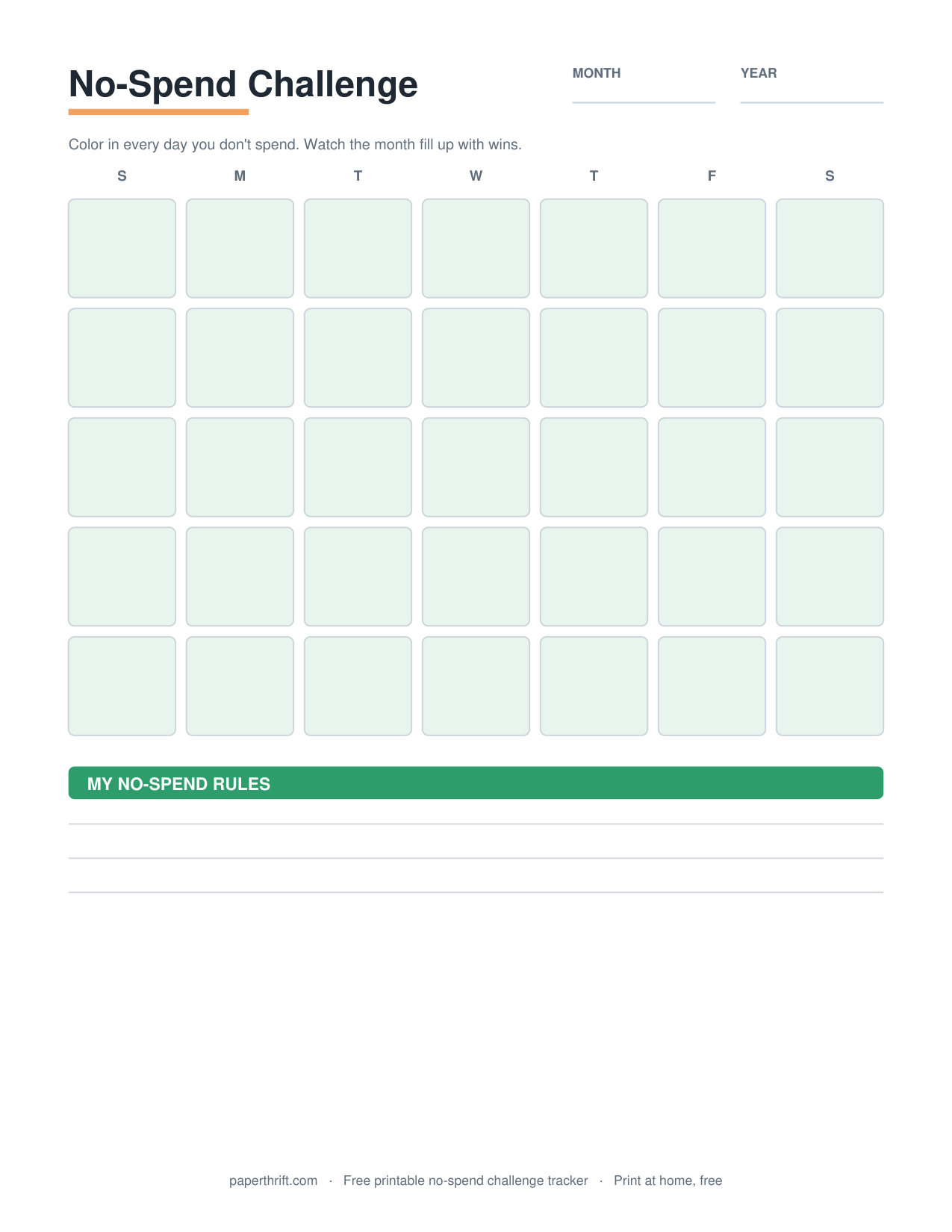
A no-spend challenge tracker is a printable calendar that marks each no-spend day with color, building a visible streak. It motivates a person to avoid discretionary purchases for a set window (a week, a month, or longer) and watch savings grow.
A no-spend challenge is a deliberate spending freeze. You keep paying essential bills (rent, utilities, groceries, gas, debt minimums) but stop all discretionary buys: takeout, coffee runs, clothes, gadgets, and impulse extras. The tracker turns that rule into a game. Each day you stay inside your own rules, you color in the square; the unbroken chain of colored days becomes the motivation to keep going.
The coloring method works because it makes progress visible. A blank square stares back at you, and most people will skip an impulse buy rather than break a 12-day streak. Pair the tracker with a clear no-spend goal and you have a low-effort reset. If you want the full strategy first, the how to make a budget guide shows where a spending freeze fits into a complete plan.
How do you use a no-spend challenge tracker?
Write your own rules, choose a length, then color one square for each successful no-spend day. Leave overspend days blank, total your savings at the end, and move the money straight into a savings goal so the win sticks.
Start by defining your rules in plain words at the top of the page: list what counts as essential (kept) and what counts as discretionary (frozen). Common frozen categories are dining out, coffee, online shopping, subscriptions, and entertainment. Then pick your window: a 7-day sprint, a classic 30-day month, or a single no-spend weekend.
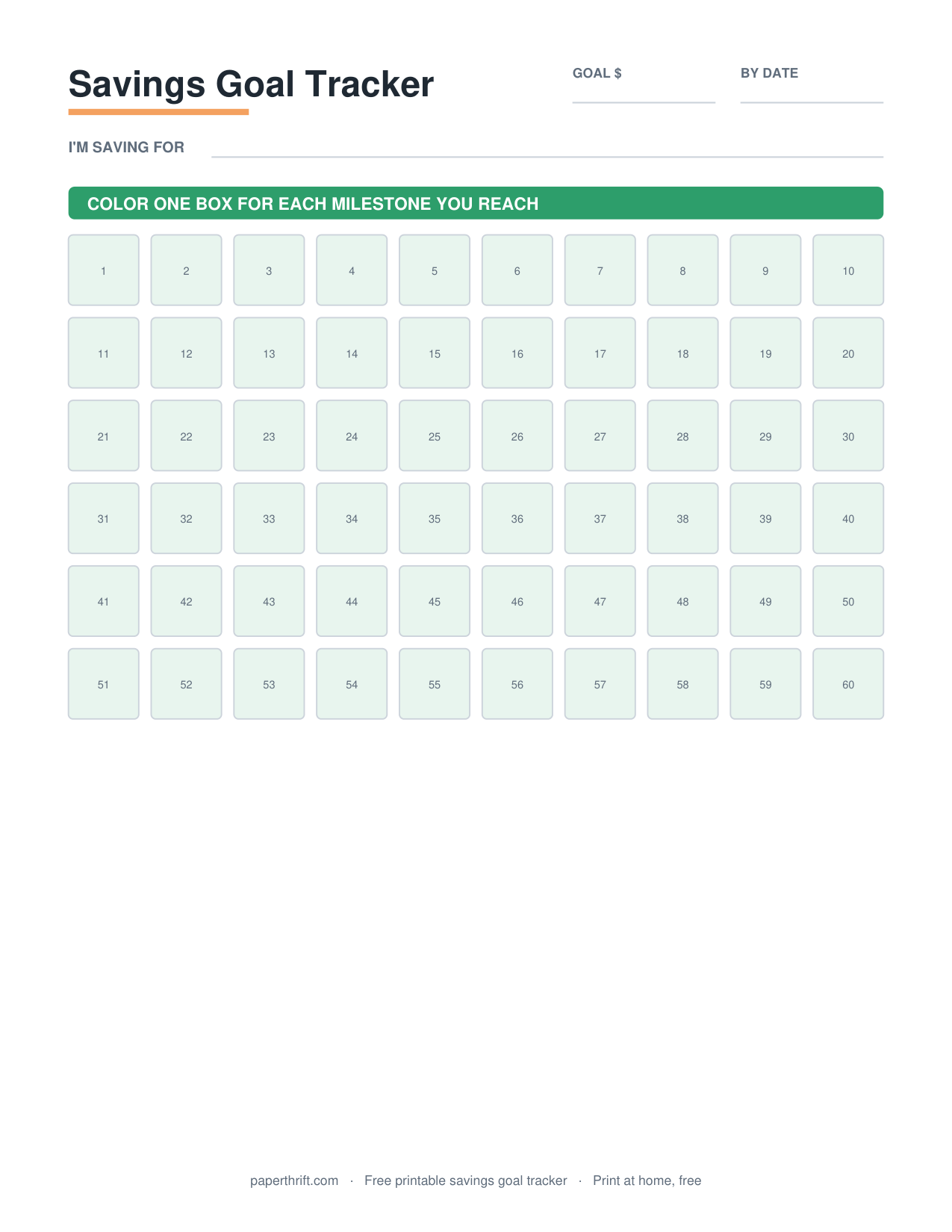
Each day you stay inside the rules, color the square. Each day you slip, leave it blank. Honesty matters more than a perfect calendar. At the end, add up the money you would normally have spent and move it somewhere it counts: a savings goal tracker for a planned purchase, a debt snowball tracker to wipe out balances faster, or a sinking funds tracker for upcoming costs. Tracking what you do spend on essentials with an expense tracker shows exactly where the freeze freed up cash.
Who is a no-spend challenge for?
A no-spend challenge suits people who feel money leaking on small impulse buys, anyone resetting habits after a holiday or vacation, and budgeters who want a fast, visible win without a complicated system or any spreadsheet.
This challenge fits the person who looks at their bank statement and cannot explain where the money went, usually $5 and $15 charges that add up to hundreds. It also helps after a high-spend stretch, like the weeks following Christmas, when a reset clears the financial fog. Beginners like it because there is nothing to calculate; you only color a box.
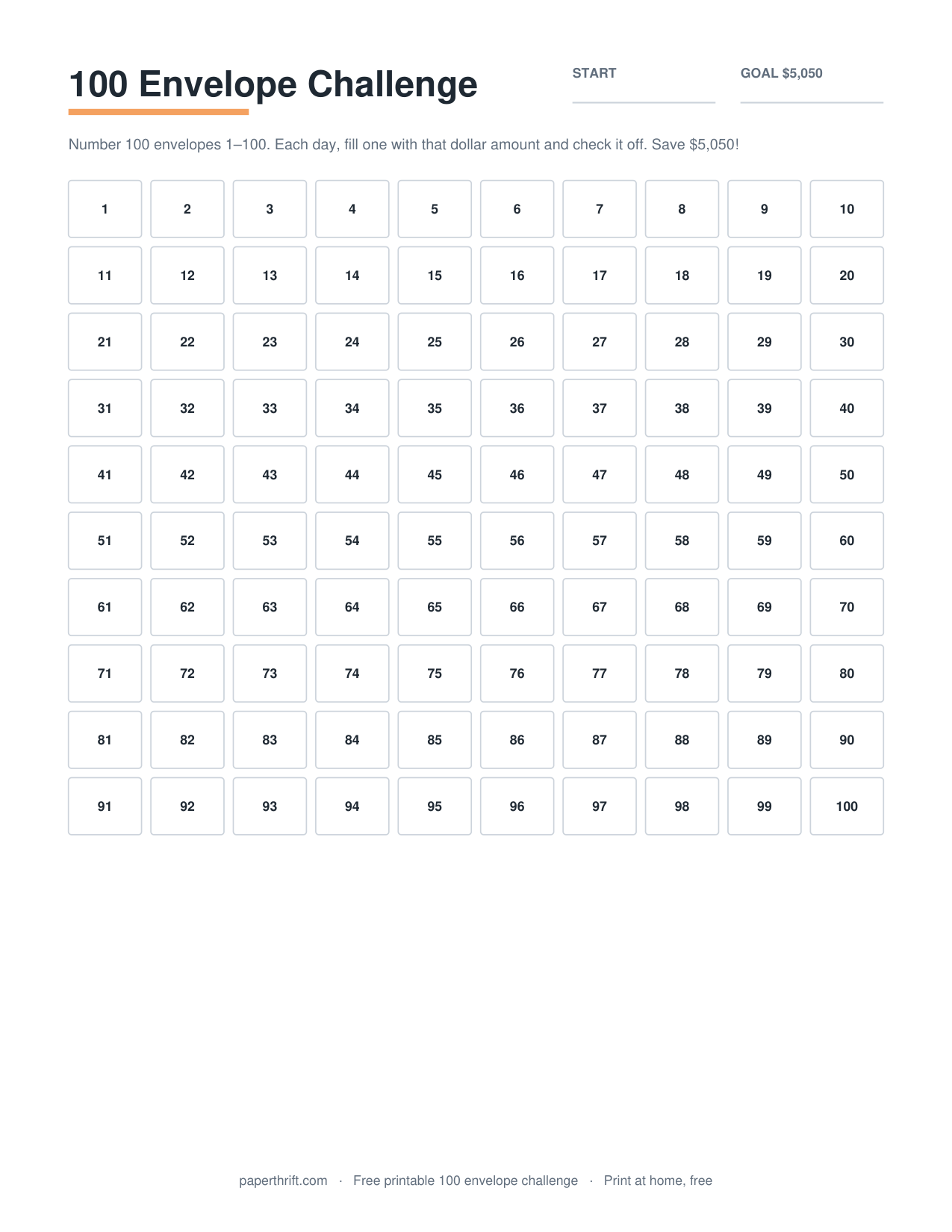
It pairs naturally with other low-friction tools. The 100 envelope challenge builds a lump sum through small daily deposits, while the cash envelope system caps discretionary categories with physical cash. If your overspending clusters around groceries, a grocery budget gives the freeze a specific target. A no-spend challenge is not individualized financial advice. It is a habit-building tool that works best alongside a real monthly plan.
The math on a modest freeze: skip one $6 coffee and one $14 takeout lunch each weekday, and a 30-day no-spend month keeps roughly $400 in your account — enough to seed an emergency fund.
How to use this printable
- Download and print Download the free no-spend challenge tracker PDF and print it at home on US Letter or A4, no email or signup required.
- Write your rules At the top, list essentials you will keep paying and the discretionary categories you are freezing, like takeout, coffee, and online shopping.
- Pick your length Choose a window: a 7-day sprint, a 30-day month, or a no-spend weekend. Circle the start and end dates on the calendar.
- Color each no-spend day Every day you stay inside your rules, color in that date's square. Leave any overspend day blank so the streak stays honest.
- Bank your savings At the end, total what you would have spent and move it into a savings goal, debt payoff, or sinking fund so the win is permanent.
How to print it
- Print at 100% scale (not Fit to Page) so the calendar grid keeps its true size on US Letter or A4.
- Use a bright marker or colored pencil for filled days. Strong contrast makes the streak easier to see at a glance.
- Print one page per month and tape them side by side on the fridge to track a longer 60- or 90-day challenge.
- Choose grayscale or black-and-white printing to save ink; you only need color for the squares you fill in yourself.
Frequently asked questions
Is the no-spend challenge tracker really free?
Yes. The no-spend challenge tracker is 100% free to download and print. There is no email, no signup, and no watermark. Just an instant PDF you can use at home as many times as you like.
What counts as a no-spend day?
A no-spend day is any day you pay only essentials (bills, groceries, gas, debt minimums) and make zero discretionary purchases like takeout, coffee, clothes, or impulse buys. You set the exact rules at the top of the tracker before you start.
How long should a no-spend challenge last?
A no-spend challenge can last as long as you choose. Common lengths are a 7-day sprint, a full 30-day month, or a single no-spend weekend. Beginners often start with one week, then repeat or extend once the habit feels natural.
Can I still pay bills during a no-spend challenge?
Yes. A no-spend challenge freezes only discretionary spending, not essentials. You keep paying rent, utilities, groceries, gas, insurance, and minimum debt payments. The goal is to cut impulse and wants, not to skip the bills you owe.
What should I do with the money I save?
Move it somewhere on purpose. Transfer the saved amount into a savings goal, put it toward debt payoff, or stash it in a sinking fund for a future cost. Assigning the money a job keeps the savings from drifting back into spending.
Paperthrift provides free educational budgeting tools and printables. It does not offer financial, investment, or tax advice. For decisions about your specific situation, consider speaking with a qualified professional.