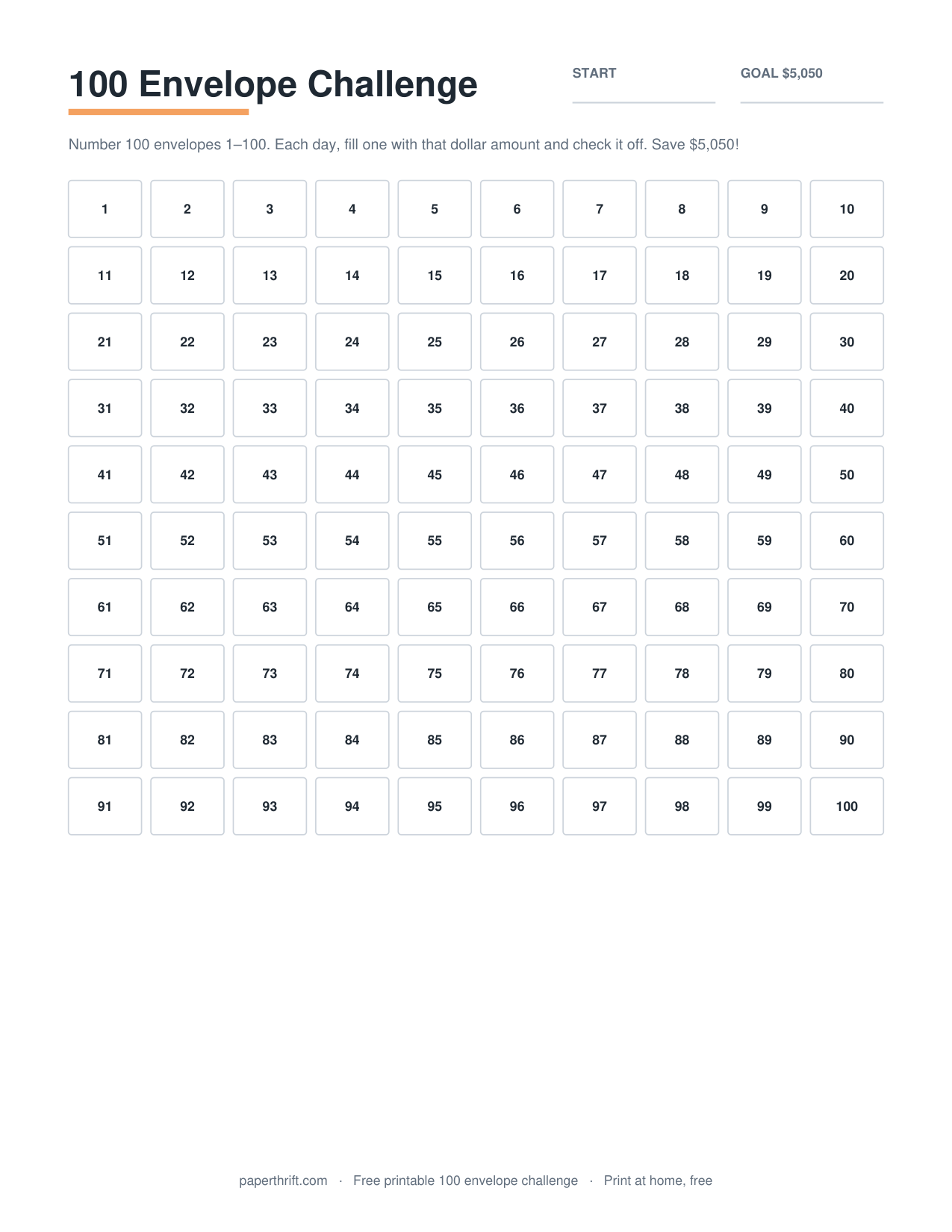
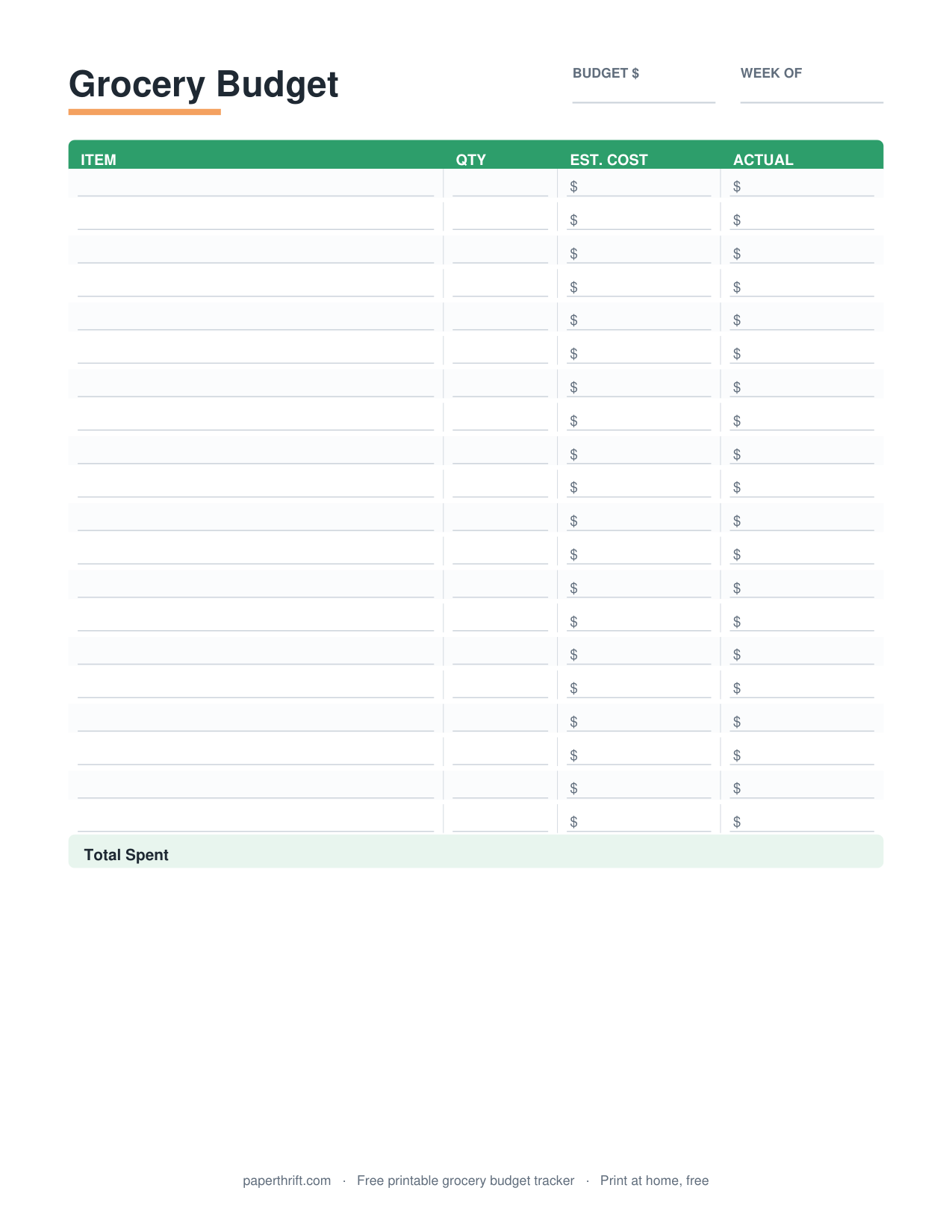
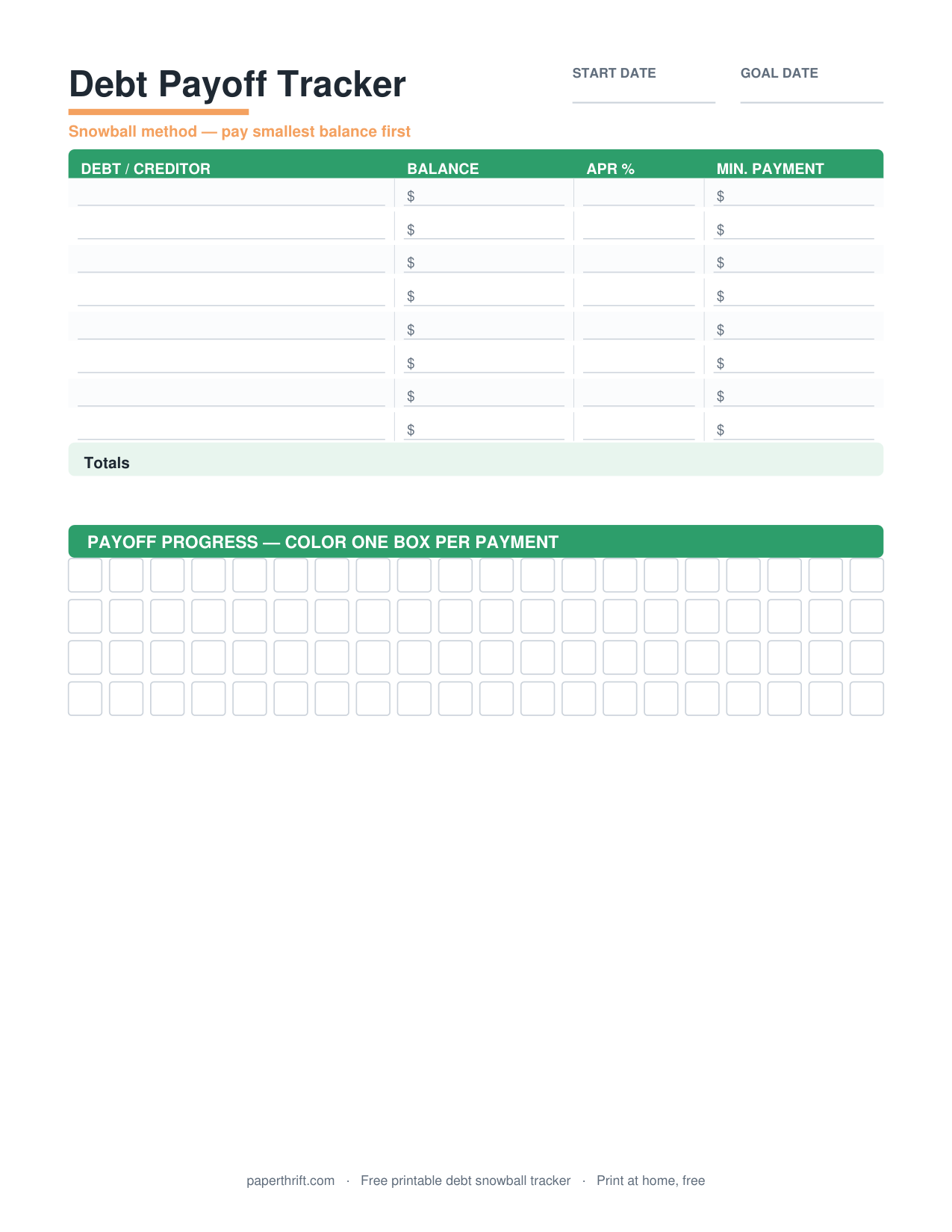
Challenge · PDF
Cash Envelope System
The cash envelope system is a budgeting method that divides spending money into labeled paper envelopes, one per category. You spend only the cash inside each envelope; when an envelope is empty, spending in that category stops until the next paycheck.
Pick a color theme
What is the cash envelope system?
The cash envelope system is a cash budgeting method that splits your spending money into labeled paper envelopes by category, such as groceries or gas. You spend only the cash inside each envelope, and an empty envelope means that category is done for the period.
The cash envelope system turns your budget into physical cash you can see and hold. After payday, you withdraw cash, then divide it into envelopes labeled by spending category: Groceries, Gas, Dining Out, Personal, and so on. Each envelope holds the exact amount you budgeted for that category. When you shop, you pay from the matching envelope and tuck the change back inside. When an envelope runs out, you stop spending in that category until your next funding date.
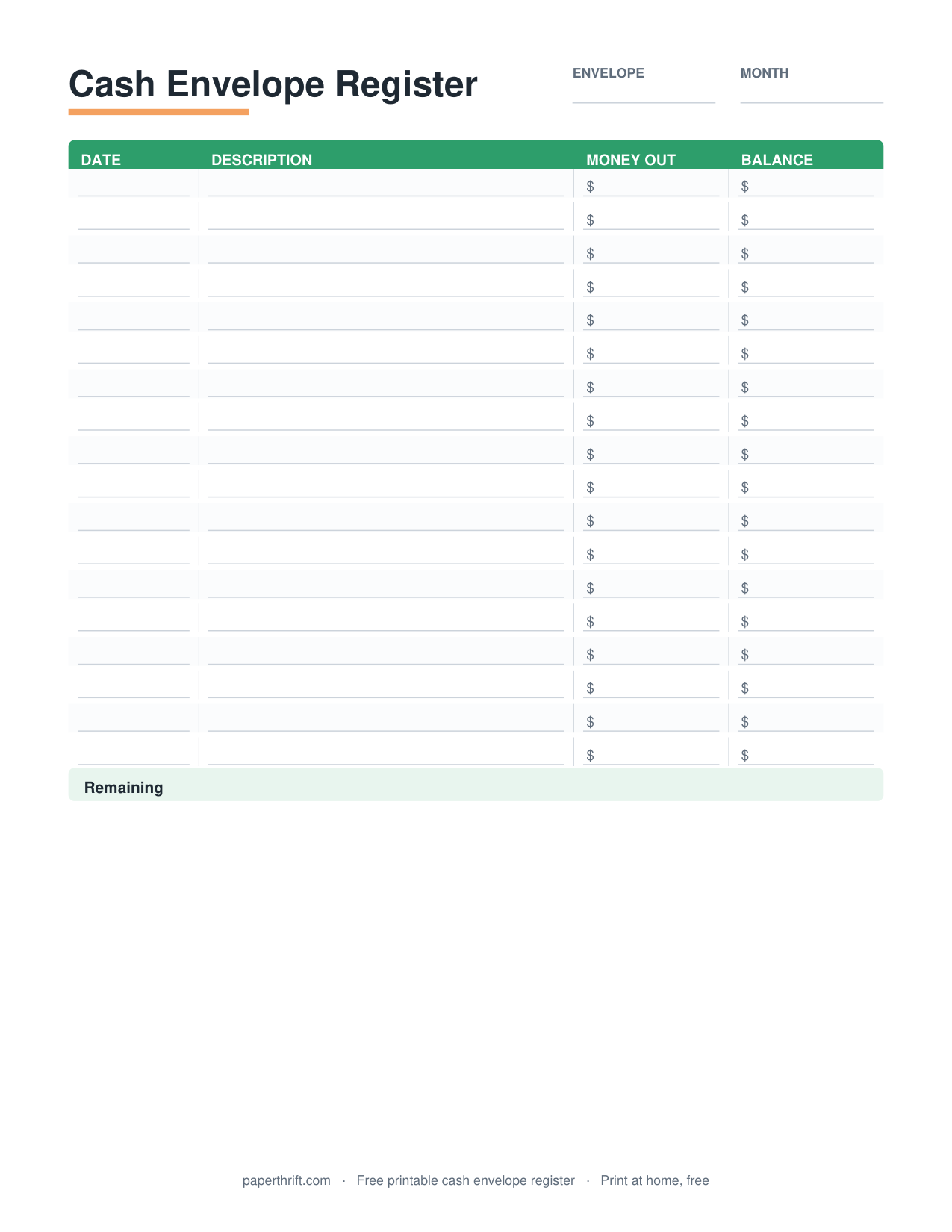
This printable pairs ready-to-cut cash envelopes with a spending register so you record every withdrawal and purchase. The register acts like a mini expense tracker for each envelope, showing your running balance at a glance. To set your envelope amounts first, build the plan on a monthly budget worksheet or follow the steps in how to make a budget.
How does the cash envelope system work?
You assign each spending category an envelope, fund it with budgeted cash on payday, and spend only what is inside. Purchases come out of the matching envelope, change goes back in, and an empty envelope stops spending in that category until you refund it.
The system runs on a simple loop: fund, spend, record, refill. On payday you withdraw your total variable-spending cash and split it across envelopes by category. Throughout the month you pay with cash from the right envelope and log the purchase on the register so the running balance stays accurate. The physical limit does the discipline for you: you cannot overspend groceries when the Groceries envelope is empty.
Use cash envelopes for variable, easy-to-overspend categories like groceries, dining out, gas, entertainment, and personal care. Keep fixed bills like rent and utilities on autopay and track them with a bill payment tracker instead. The cash envelope method fits neatly into a paper binder routine; learn how to set one up in how to start a budget binder, and pair it with a weekly budget if you refill envelopes more often than monthly.
Who is the cash envelope system best for?
The cash envelope system is best for people who overspend with cards, want a hands-on budget, or are paying down debt and need hard spending limits. It suits anyone who finds physical cash more real and easier to control than swiping.
This method works for spenders who feel cards make money invisible. Handing over real bills creates friction that slows impulse buys, so people rebuilding habits or fighting overspending often see the fastest results. It also helps couples get on the same page, since both partners can see exactly how much cash a category has left.
The cash envelope system pairs well with debt payoff. By capping variable spending, you free up dollars to throw at balances using the debt snowball tracker. It also supports saving goals: route leftover cash from an envelope into a savings goal tracker at the end of the period. If you prefer percentage targets, set your envelope amounts using the 50/30/20 budget framework, then convert each category into a funded envelope.
A typical split on a $3,200 take-home month: $500 groceries, $160 gas, $120 dining out, and $80 personal spending — $860 withdrawn in cash at the start of the month, while bills stay in the account on autopay.
How to use this printable
- Print and cut the envelopes Print the cash envelope template on US Letter or A4, then fold and cut along the lines to assemble one envelope per spending category.
- Label each envelope by category Write a category on each envelope, such as Groceries, Gas, Dining Out, or Personal, and add the budgeted dollar amount for the period.
- Fund the envelopes with cash On payday, withdraw your total variable-spending cash and split it into each envelope to match your budgeted amounts.
- Spend only from the matching envelope Pay for each purchase with cash from the right envelope, return any change to it, and log the amount on the spending register.
- Stop or refill when empty When an envelope is empty, pause spending in that category until your next funding date, then refill the envelopes and repeat.
How to print it
- Print at 100% scale (Actual Size), not Fit to Page, so the fold and cut lines line up correctly.
- Use slightly thicker paper or cardstock so the envelopes hold cash and survive daily handling.
- Print the spending register single-sided to keep the running balance easy to read and update.
- Print one extra envelope sheet so you can re-cut envelopes that wear out mid-month.
Frequently asked questions
Is the cash envelope system printable free?
Yes. This cash envelope system is 100% free to download and print as a PDF. There is no email or signup required, and it prints at home on standard US Letter or A4 paper.
What categories should I put on cash envelopes?
Use cash envelopes for variable categories that are easy to overspend: groceries, gas, dining out, entertainment, personal care, and pocket money. Keep fixed bills like rent and utilities on autopay and track them separately.
How many envelopes do I need?
Most people use four to eight envelopes, one per variable spending category. Start with three or four core categories like groceries, gas, and dining out, then add more only if you actually use them.
What happens when an envelope is empty?
When an envelope is empty, you stop spending in that category until your next funding date. Avoid borrowing from other envelopes; doing so defeats the limits that make the system work.
Can I use the cash envelope system without carrying cash?
Yes. You can run a digital version by tracking the same category limits on the spending register and using your debit card, deducting each purchase from the matching envelope balance instead of physical bills.
Paperthrift provides free educational budgeting tools and printables. It does not offer financial, investment, or tax advice. For decisions about your specific situation, consider speaking with a qualified professional.