Challenge · PDF
100 Envelope Challenge
The 100 Envelope Challenge is a savings method that uses 100 numbered envelopes, where you fill each envelope with its matching number in dollars ($1 through $100) until all 100 envelopes are full and you have saved $5,050.
Pick a color theme
What is the 100 Envelope Challenge?
The 100 Envelope Challenge is a savings method that uses 100 numbered envelopes. You fill each envelope with its matching dollar amount ($1 through $100) until every envelope is full. Completing all 100 envelopes saves you exactly $5,050.
The 100 Envelope Challenge turns saving into a simple game. You number 100 envelopes from 1 to 100, then put the matching dollar amount inside each one: $1 in envelope 1, $50 in envelope 50, $100 in envelope 100. The math is fixed: the numbers 1 through 100 add up to $5,050, so a finished set always holds the same total.
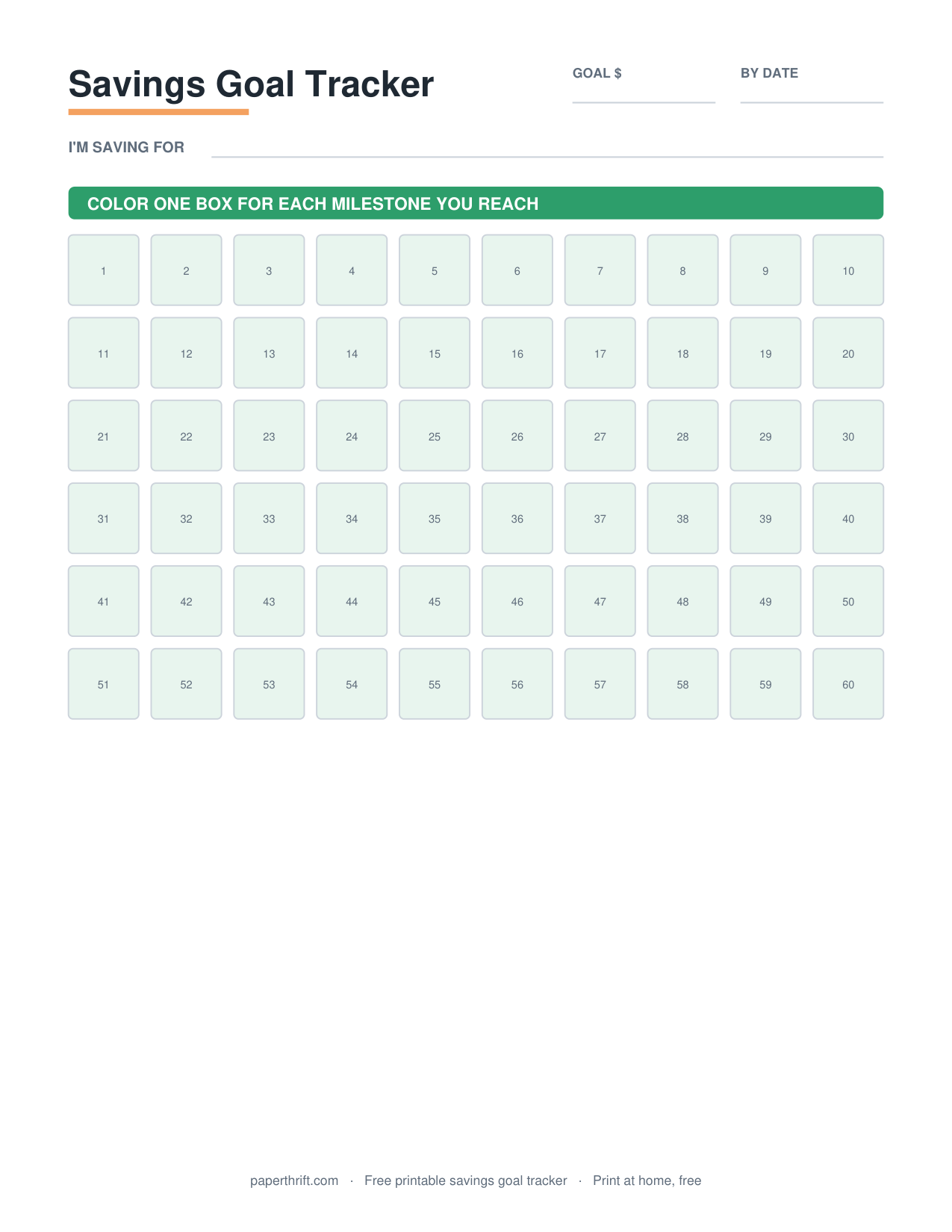
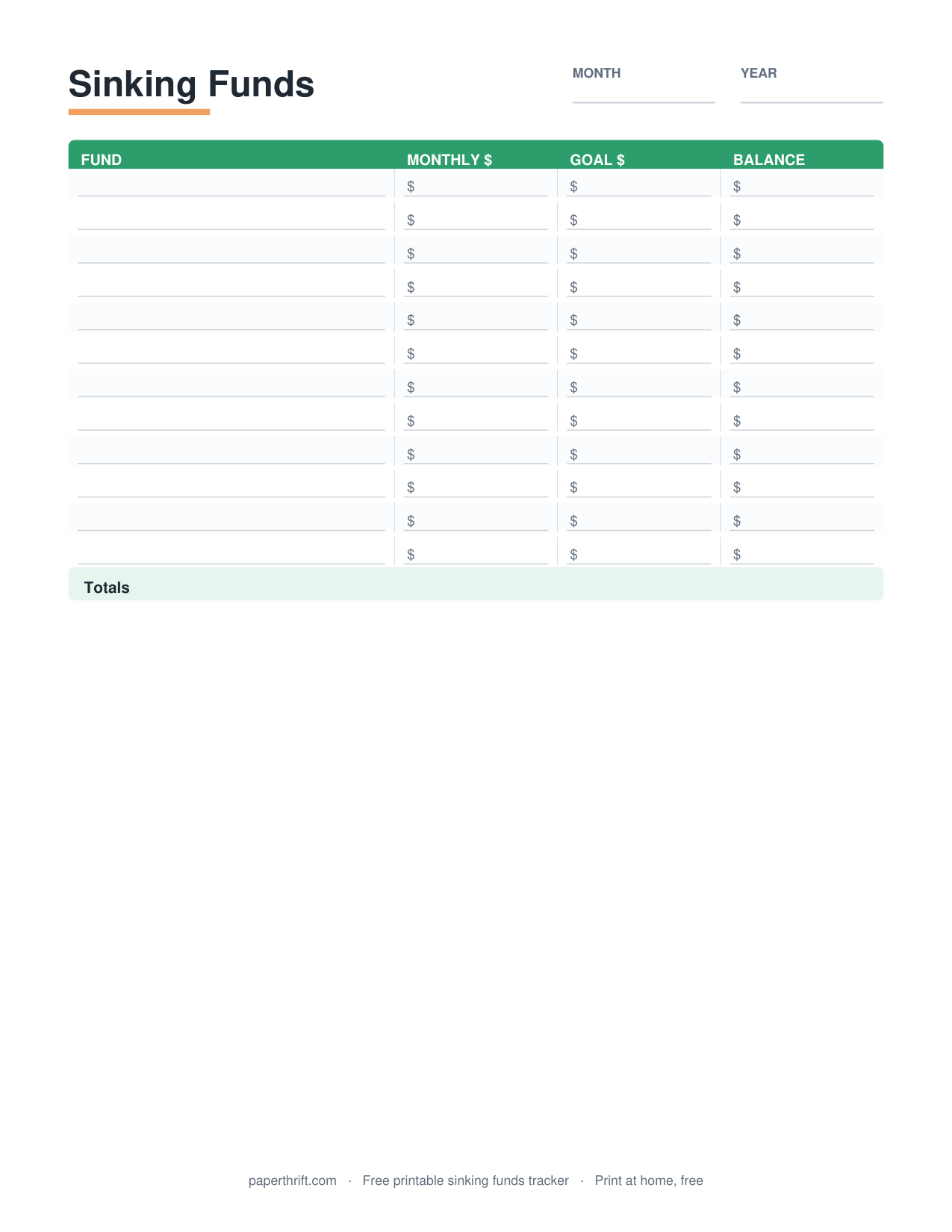
The challenge works because it removes decisions. You don't guess how much to save. The envelope number tells you. Many savers pull two random envelopes a day to finish in about 50 days, or one a day to finish in 100. This printable tracker pairs naturally with a savings goal tracker for a target like a vacation or emergency fund, and with sinking funds when you're saving for several things at once.
How does the 100 Envelope Challenge work?
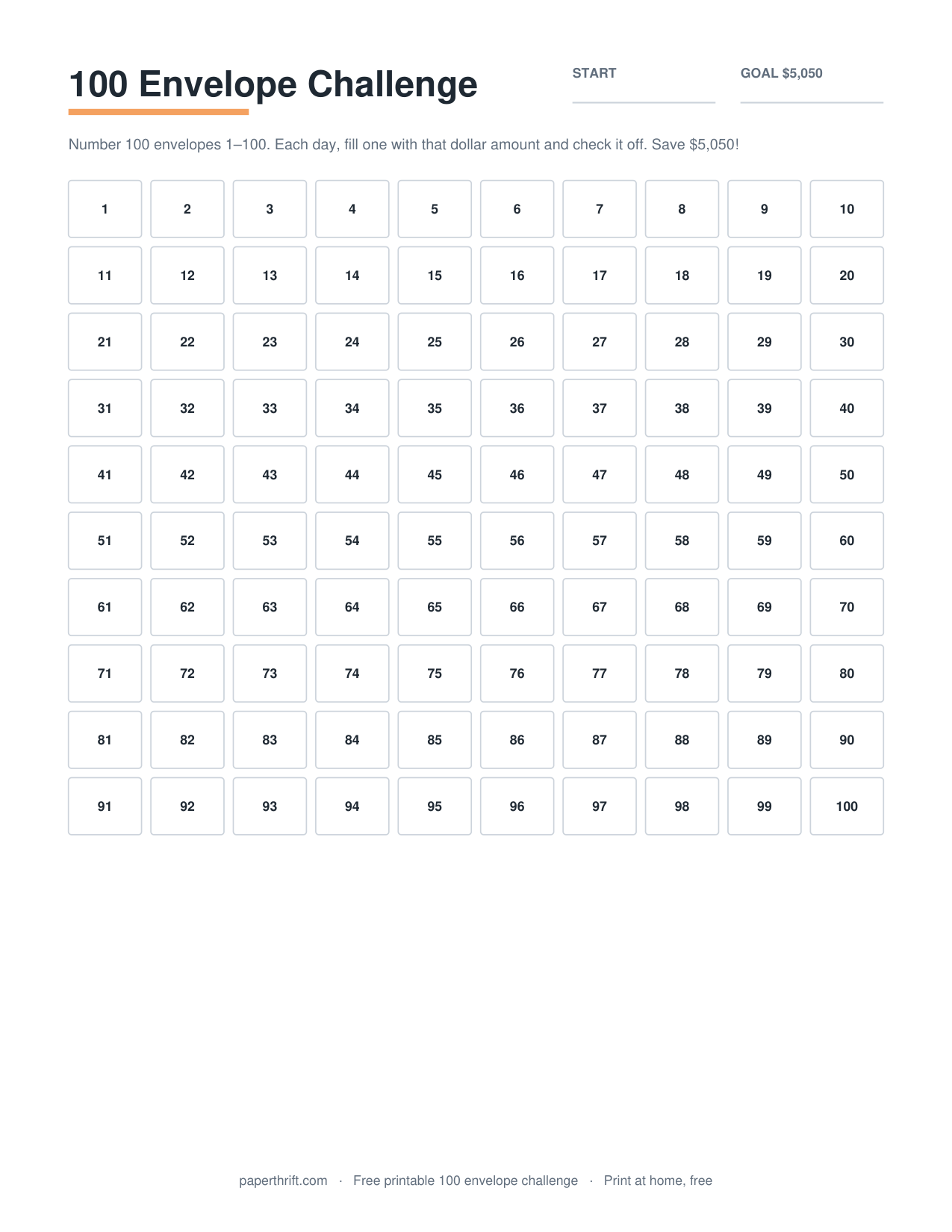
Number 100 envelopes 1 to 100. Each day, choose one or more envelopes and place that exact dollar amount inside. Mark each filled envelope on your tracker. When all 100 are full, you have saved $5,050.
The rules are short. First, label 100 envelopes with the numbers 1 through 100. Second, each time you save, pick an envelope and put that many dollars in it. Envelope 37 gets $37. Third, color in or check off that number on your printable tracker so you can see progress at a glance. Fourth, keep going until no numbers are left.
You control the pace. A daily one-envelope schedule finishes in 100 days. Filling two envelopes a day finishes in 50 days. A weekly schedule of seven envelopes finishes in about 15 weeks. Some savers flip it for tough weeks: grab the low-numbered envelopes ($1, $4, $9) when money is tight and save the big ones ($95, $100) for paydays. If a strict daily habit feels heavy, a gentler no-spend challenge or a small weekly budget can free up the cash to fill more envelopes.
| Pace | Envelopes filled | Time to finish | Total saved |
|---|---|---|---|
| Relaxed | 1 per day | 100 days | $5,050 |
| Standard | 2 per day | 50 days | $5,050 |
| Weekly | 7 per week | ~15 weeks | $5,050 |
| Scaled down | 50 envelopes, 1 per day | 50 days | $1,275 |
How much money does the 100 Envelope Challenge save?
The 100 Envelope Challenge saves $5,050 total. The amount is fixed because the numbers 1 through 100 always add up to $5,050. The average envelope holds $50.50, and you save roughly $353 per week on a 100-day daily plan.
The $5,050 figure never changes. It is the sum of every whole number from 1 to 100. That makes the challenge easy to plan around. If $5,050 is more than your budget allows, you can scale it down: a 50 Envelope Challenge saves $1,275, and halving each amount ($0.50 to $50) saves $2,525.
The weekly cash demand is uneven, which trips some people up. Filling envelopes in order 1 to 100 starts easy but ends with a brutal final week near $95 to $100 each. Filling them in random order, or pairing a high envelope with a low one each day, keeps the weekly cost steadier. Track the running total on your printable and move the money to a real savings account when each batch is full so it earns interest and stays out of reach. Pair this with a full monthly budget worksheet or the 50/30/20 budget to see where the envelope money fits in your income.
How to use this printable
- Print the tracker Download the free 100 Envelope Challenge PDF and print it at home on US Letter or A4, no email or signup needed. Print a second copy if you want one for the fridge and one for your binder.
- Number your envelopes Label 100 envelopes 1 through 100. Any envelopes work: plain mailers, mini coin envelopes, or a labeled accordion folder. Store them in a box or zip pouch so none go missing.
- Pick your pace Decide how fast to finish: one envelope a day for 100 days, two a day for 50 days, or seven a week for about 15 weeks. Write your target end date on the tracker.
- Fill and check off Each session, choose an envelope and put that exact dollar amount inside, then color or check that number on the tracker. Mix high and low numbers to keep weekly costs even.
- Move money to savings When a batch of envelopes is full, deposit the cash into a real savings account so it earns interest and stays out of spending reach. Repeat until all 100 envelopes are full and you have saved $5,050.
How to print it
- Print at 100% scale (not 'Fit to page') so the 100 numbered boxes stay full size and easy to color in.
- Use US Letter in the US and A4 elsewhere. Both sizes are included in the free PDF.
- Print on cardstock if you want to tape the tracker to the fridge or pin it to a board for daily motivation.
- Black-and-white printing works fine. Color in filled envelopes with any pen or highlighter you already own.
Frequently asked questions
How much do you save with the 100 Envelope Challenge?
You save $5,050. The numbers 1 through 100 always add up to $5,050, so a completed set of 100 envelopes holds exactly that amount no matter what order you fill them in.
How long does the 100 Envelope Challenge take?
It depends on your pace. Filling one envelope a day takes 100 days, two a day takes 50 days, and seven a week takes about 15 weeks. You set the schedule that fits your budget.
Is the 100 Envelope Challenge printable free?
Yes. The Paperthrift 100 Envelope Challenge tracker is 100% free, downloads instantly as a PDF, and needs no email or signup. Print it at home in US Letter or A4.
What if I can't afford the high-numbered envelopes?
Fill envelopes in random order or pair a high number with a low number each day to even out the cost. You can also scale down: a 50-envelope version saves $1,275 instead of $5,050.
Do I need real cash for the challenge?
No. You can use real cash in physical envelopes or track the amounts digitally and move the matching money into a savings account. The tracker works the same either way. The goal is the $5,050 total.
Paperthrift provides free educational budgeting tools and printables. It does not offer financial, investment, or tax advice. For decisions about your specific situation, consider speaking with a qualified professional.